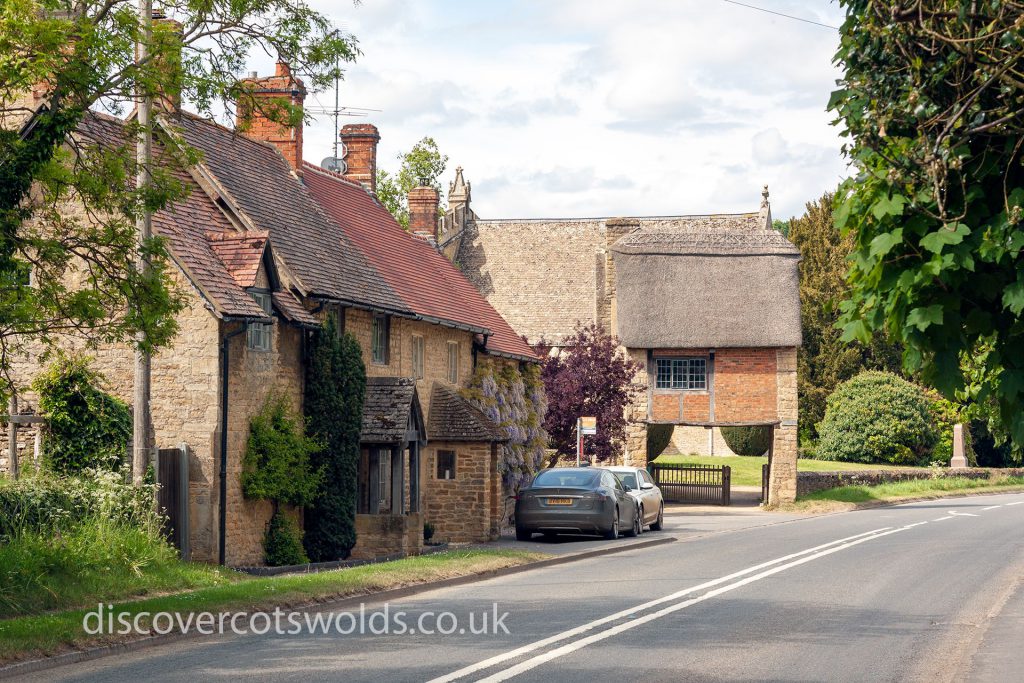
Long Compton is a small village (population around 750 residents) in the Warwickshire Cotswolds. The village of Long Compton is historically significant and picturesque, featuring charming medieval architecture, including thatched cottages and a historic church.
It’s nestled at the bottom of a valley, close to the border with Oxfordshire and to the north of the market town of Chipping Norton.
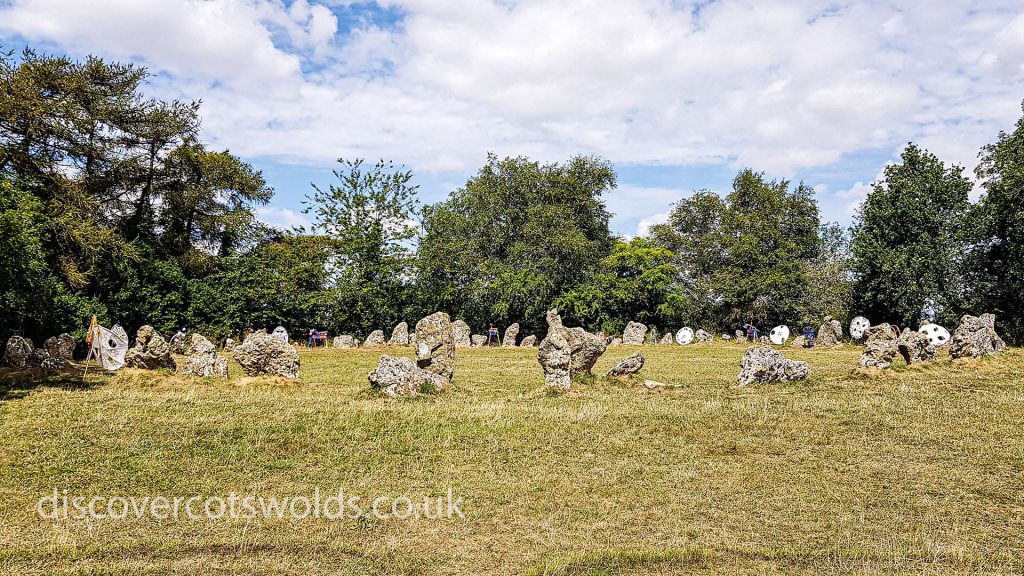
The Neolithic Rollright Stones sit about a mile south of the village, up a steep hill on the Warwickshire and Oxfordshire border. The complex is made up of three monuments: the King’s Men stone circle, the King Stone and the Whispering Knights. They are normally open to the public daily, year round.
What’s in a name?
The village dates back to Saxon times and the origins of the name Compton meant a village or enclosure of buildings at the bottom of a deep valley between two hills. The village is part of the Cotswolds National Landscape and features typical Cotswold characteristics.
The long part was added later to distinguish the village from other, nearby Comptons (eg Little Compton). The village is over a mile long from end to end, so it makes perfect sense.
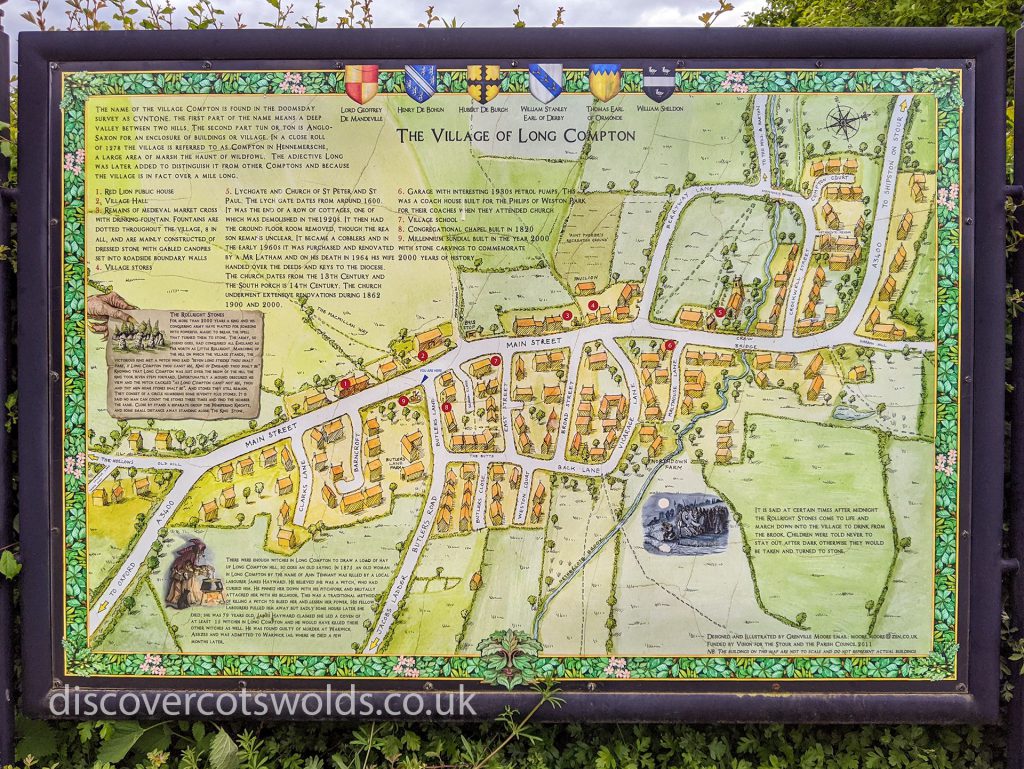
Location and Geography
Long Compton is situated in south Warwickshire, in the north Cotswolds, and is known for its picturesque landscapes and historical landmarks.
The Long Compton lych gate
This picturesque village is on the main route between Oxford and Stratford upon Avon and as such, many passers by will be familiar with one of the most unusual and striking features of Long Compton, located on the edge of a scenic escarpment.
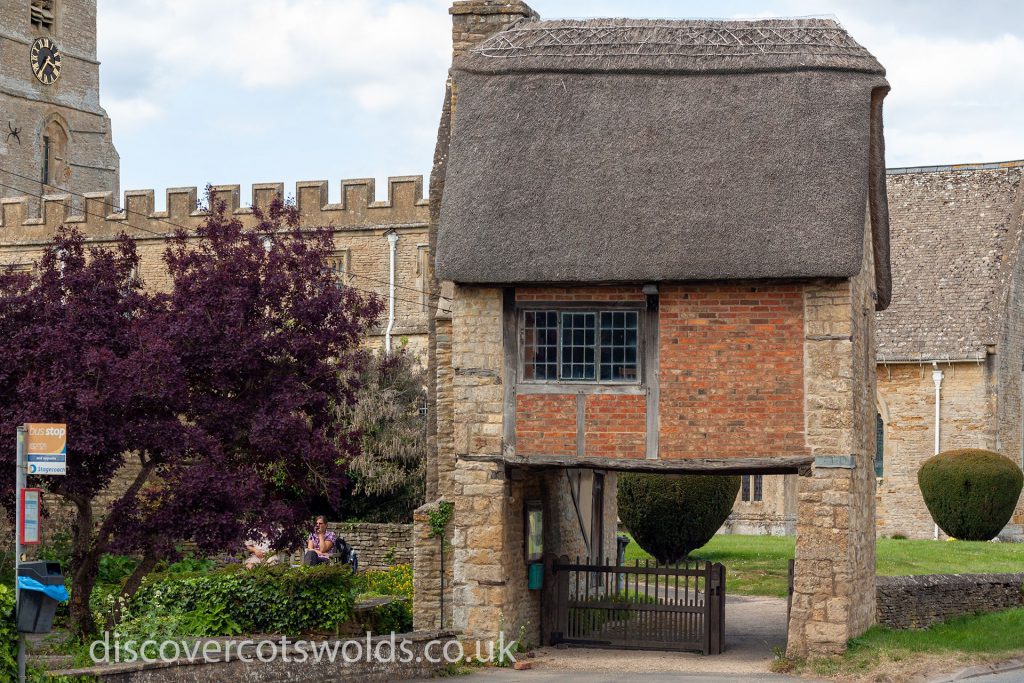
The Long Compton lych gate stands at the entrance to the large parish church of St Peter and St Paul.
Inside the church, you can find carved figures of men and women in period costume, adding to the historical charm of the site. There is also a well-worn effigy of a woman located in the church’s south porch.
Lych gates aren’t usually quite as substantial as this one. Traditionally they were roofed gateways to church yards, used for sheltering the coffin at the beginning of a funeral.
This unusual looking building dates back to the 17th century. It was once at the end of a row of terraced cottages, which have long since been demolished.
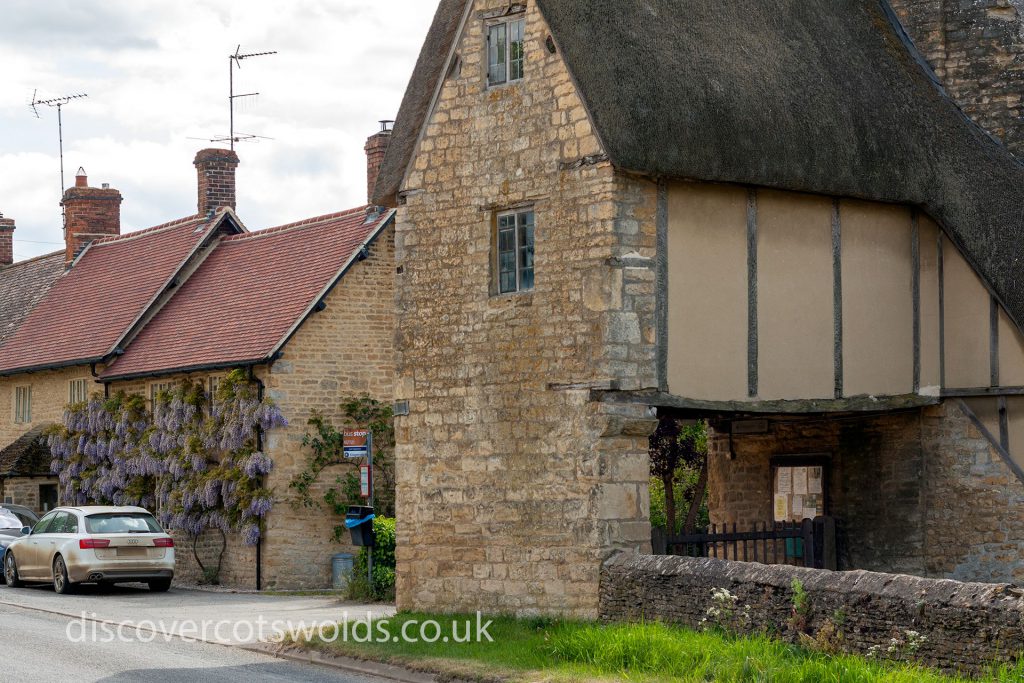
Privately owned until the 1960s when it was given to the church and the ground floor removed.
Over the years it has been a shop, a dwelling, it is now used by the local historical society. It must have made for quite a cosy, if cramped abode. Compact and bijou anyone?
Long Compton’s witches
Long Compton has a long and uneasy association with witchcraft. A local saying, recorded in the nineteenth century, held that there were “enough witches in Long Compton to draw a load of hay up Long Compton hill”, a measure of how steeped in superstition this corner of the Cotswolds once was.
That folklore turned to tragedy in 1875. On the evening of 15 September, an elderly villager named Ann Tennant was attacked in the street by James Haywood, a local farm labourer who had convinced himself that the village was full of witches blighting his work. He struck her with a pitchfork and she died of her injuries. The inquest was held here in the village, at the Red Lion Inn, and Haywood was found not guilty by reason of insanity and detained indefinitely. The case made national headlines and fixed the village’s reputation in the folklore of the region.
The superstition was never far from the standing stones on the hill above. The Rollright Stones carry their own witch legend: a witch was said to have challenged a would-be king with the words “Seven long strides shalt thou take, and if Long Compton thou canst see, King of England thou shalt be.” As the king strode forward a mound of earth rose to block his view of the village, and the witch turned him and his men to stone, where they stand to this day.
Places to stay
There are a few places to stay in the village, including the Red Lion Inn, which is also the only pub in the village.
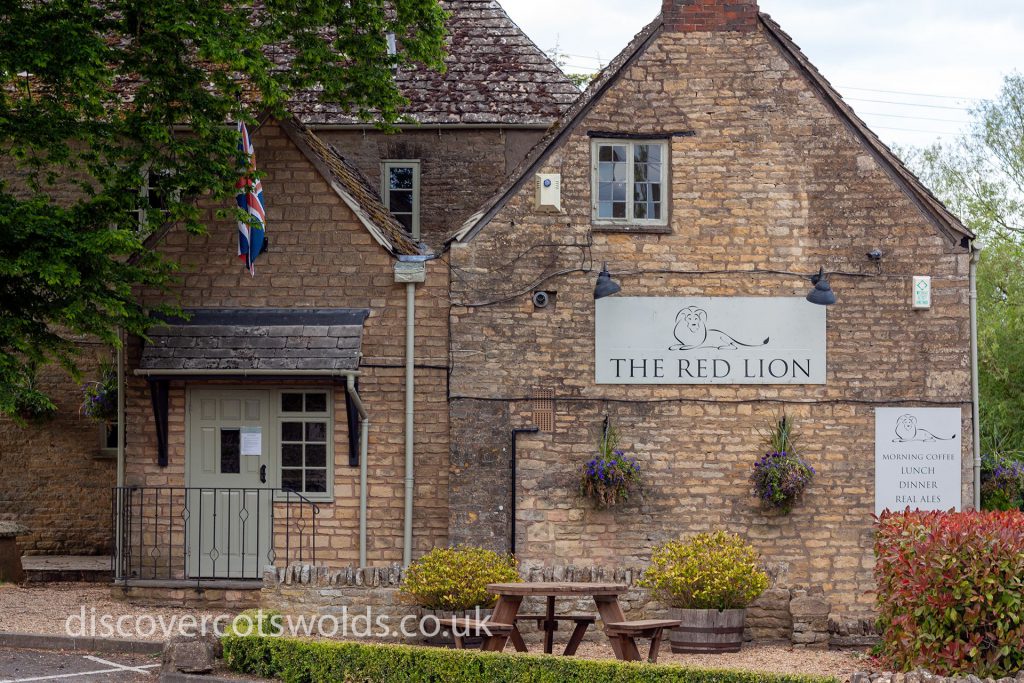
This Grade II listed, former coaching inn dating from 1748 offers food and rest for the weary traveller, including dog friendly accommodation. A bonus if you are taking your four legged friend on a trip with you.
Get information on availability and making a booking here.
Other than that, there is an assortment of holiday cottages and bed and breakfast accommodation dotted throughout the village.
Getting here
Long Compton is situated in the district of Stratford-upon-Avon, approximately 5 miles north of the market town of Chipping Norton. The village is nestled at the foot of a hill, offering breathtaking views of the surrounding countryside.
The village is also close to the historic towns of Stow-on-the-Wold and Moreton-in-Marsh.
As mentioned earlier, Long Compton is on the A3400 between Stratford upon Avon and Oxford. As such, getting here by car or other motorised transport is quite easy.
There is no train station in the village, the nearest one is in Moreton in Marsh, which is about a 15 minute drive away. There are however, regular bus services to the village.
We’ve got more information on getting to the Cotswolds right here.
St Peter and St Paul
As with many Cotswolds towns and villages, the church is a large and prominent feature.
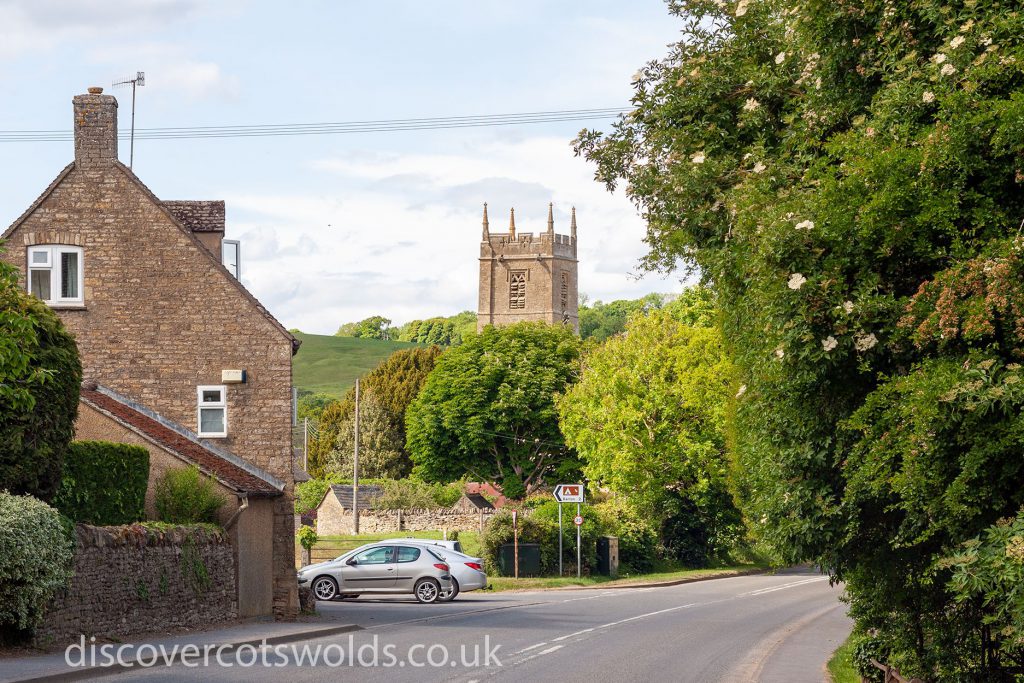
It’s said to be the only building in the village to have survived the English Civil War and parts of it date back to the 13th Century.
There is reputed to have been a church on the site as far back as the 5th Century that was visited by St Augustine but sadly there is no evidence to support these legends.
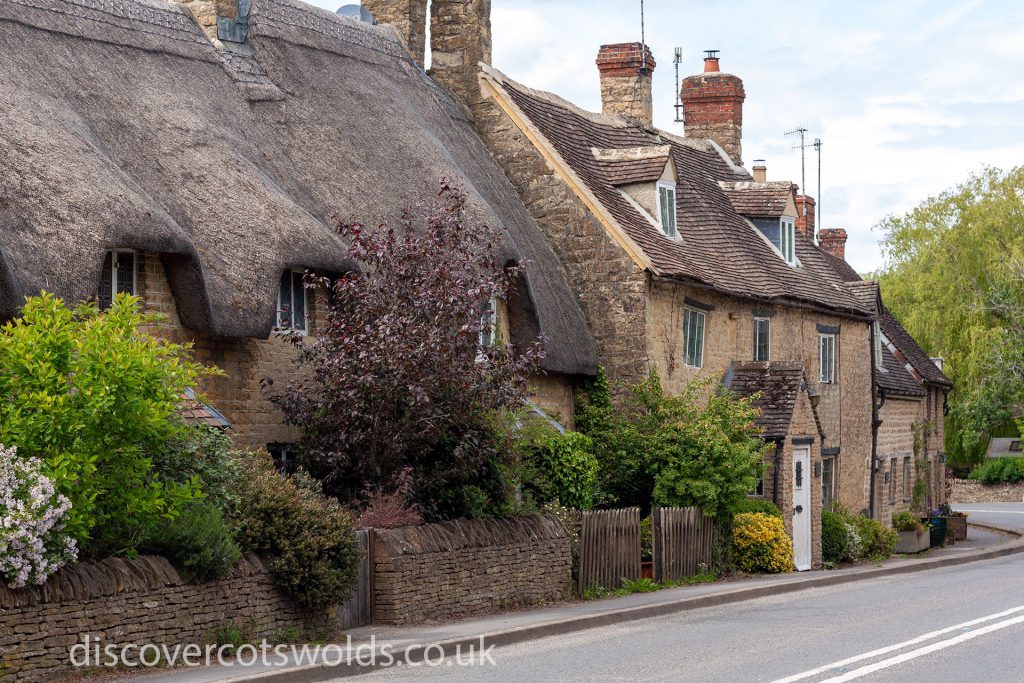
The rest of the buildings in the village date from the 17th century and later and Long Compton has its fair share of traditional looking stone cottages as well as more recent additions.
Public Conveniences
Unlike many of the larger or more visited Cotswolds villages, there are no public conveniences in Long Compton.
See more Cotswold villages.
Some links on this page are affiliate links. If you book through them, we may earn a commission at no extra cost to you.