If you have arrived at this site, you may well be asking yourself, where is the Cotswolds?
The Cotswolds is a region of hills located in south-western and west central England. It covers roughly 800 square miles of land (2,071.99 square kilometres), measuring 90 miles (145 km) long and 25 miles (40 km) across.
What area does the Cotswolds cover?
The area touches upon six English counties, mainly Oxfordshire and Gloucestershire, but also Somerset, Worcestershire, Warwickshire and Wiltshire.
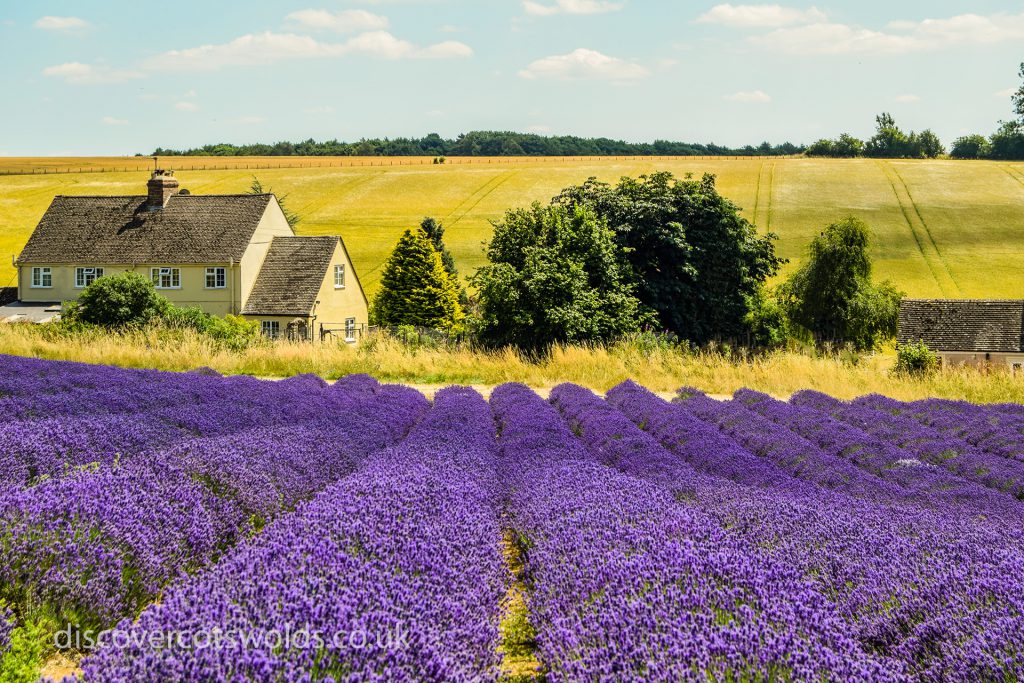
The Cotswolds’ location just north-west of London means it’s situated within reachable distance from the capital city and several other populous regions like the Midlands and Wales. In most cases, visitors can get here within a couple of hours by train or car.
The Cotswolds’ Designation as an Area of Outstanding Natural Beauty (AONB)
Areas of Outstanding Natural Beauty, otherwise abbreviated as AONB, are government-designated pieces of protected land. There are 34 in England, each overseen by Natural England and protected by the Countryside and Rights of Way Act 2000.
The goal of AONB designation is to recognize the country’s unique natural beauty and preserve its precious spaces from human settlement and development. Under current laws, AONBs maintain the same landscape quality and status as natural parks.
Areas of Outstanding Natural Beauty were introduced in Britain after the passing of the National Parks and Access to the Countryside Act in 1949. The Cotswolds received AONB status in 1966 and has remained largely untouched ever since.
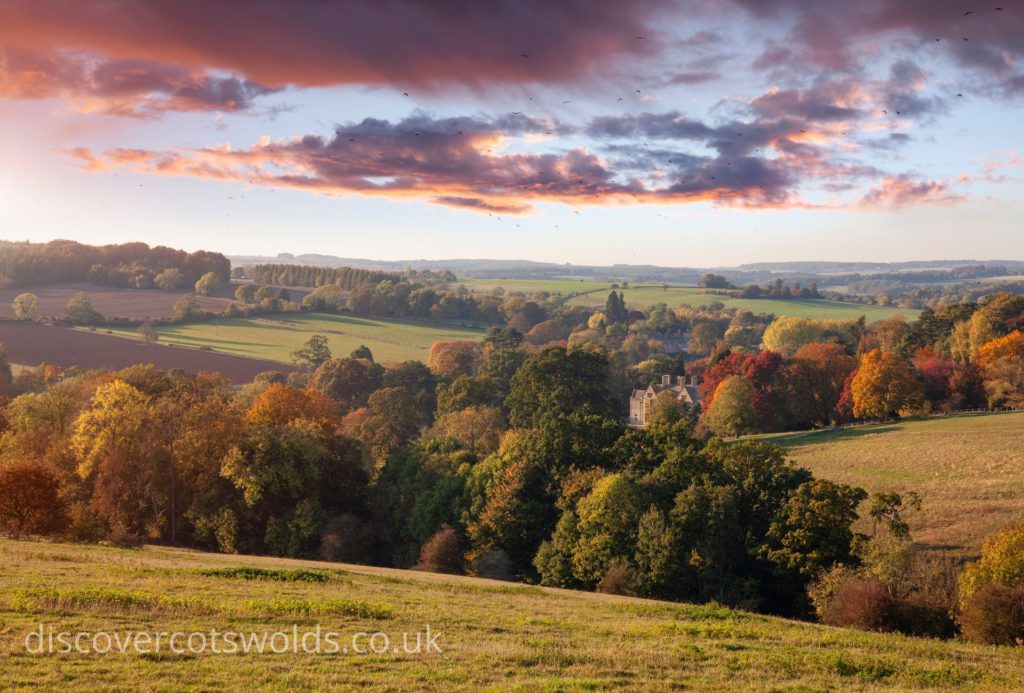
The official borders of The Cotswolds’ AONB-designated land stretch from Worcestershire and South Warwickshire through West Oxfordshire and Gloucestershire while partially cutting into Wiltshire, Bath, and North East Somerset. The region’s official surface area was increased to 787 square miles (2,038 square kilometres) in 1991 after the government had all national Areas of Outstanding Natural Beauty re-measured with the use of modern tools.
Today, The Cotswolds holds the title as England and Wales’ largest AONB and is managed in part (63%) by Gloucestershire County Council and the Cotswolds Conservation Board. A group called the Cotswold Voluntary Wardens was established in 1968 and maintains the region’s state throughout the year. Its team of 350-plus members regularly patrol roughly 3000 miles of public footpath and dry stone walls, plant trees and conduct public engagements with the goal of preserving The Cotswolds’ rich history and natural beauty.
Geology
The Cotswolds is most recognizable for its far-spanning hills, which form part of an outcrop of Jurassic rock running through the region’s north and south ends. They’re fairly large and measure a highest point of 1,083 feet (330 metres) at Cleeve Hill, just to the north of Cheltenham
The area’s compressed terrain has afforded it plenty of gorgeous peaks and valleys, many nestling small towns built from their oolitic limestone. The material is an extremely common find throughout the Cotswolds and known for its speckled appearance resembling fish eggs. Up north, you’ll notice that the stone takes on a warmer, more honey-toned shade, while its colour becomes creamier and paler the further south you go. This is due to the different oxides that were present during its formation over time.
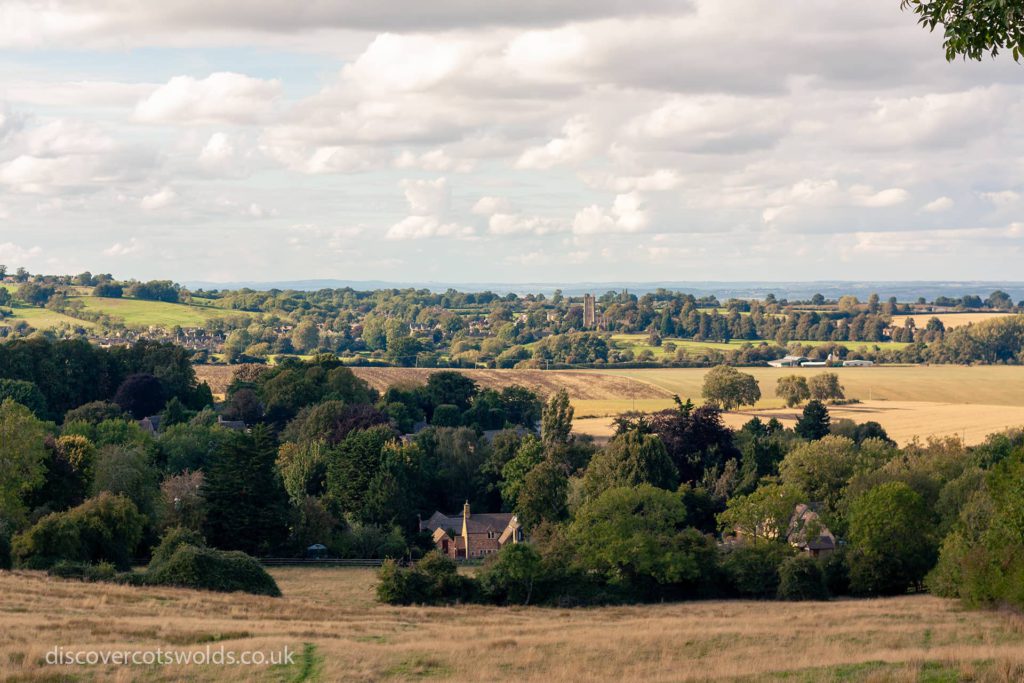
The Cotswolds boasts a number of rivers and streams, most of which are classed as salmonid. They’re home to all sorts of natural wildlife, including native brown trout, white-clawed crayfish, water voles and otters.
Scattered in between lies 50% of the United Kingdom’s total ‘Unimproved Jurassic Limestone Grassland’, thousands of trees and beech woodlands that account for roughly 10% of the Cotswolds area.
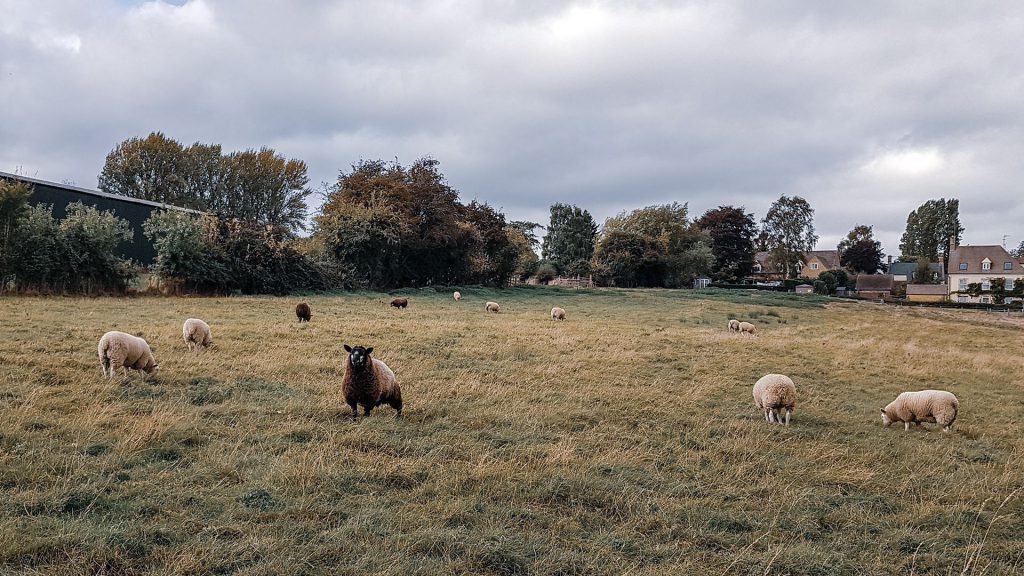
As of today, over 80% of usable landscape is used for agricultural purposes – mainly the production of barley, field beans, oilseed rape and wheat. Sheep rearing is still a popular practice in the region as well, and it’s not uncommon to see a flock here or there.
History of the Cotswolds
The Cotswolds region isn’t just significant for its geological character – the region is also a historic part of England, having played a large part in it, and humanity’s, development. The land was first cultivated over 6,000 years ago and largely run by hunter-gatherers whose flint arrowheads are still found to this day.
Over time, its use evolved with local migrations; Neolithic long barrows and Iron Age hill forts left behind from past civilizations were overshadowed by Roman-era towns and villas, and eventually small settlements in the Middle Ages.
It was during this time that the Cotswolds really began to grow in prominence, as serfs and farmers capitalised upon the region’s rolling hills for sheep farming. They bred their own kind – imaginatively called Cotswolds – and grew the local market to the point where it was one of Europe’s top wool producers.
With the wealth they accumulated through prolific wool sales, merchants further developed The Cotswold towns and villages with large houses and cathedral-style churches, many of which remain today. They were largely untouched during the Industrial Revolution as industry mills moved to the coalfields in favour of steam power.
Throughout the twentieth century, The Cotswolds became increasingly popular with tourists, and many of its buildings were turned into hotels or B&Bs. In 1966, the Cotswolds was declared an Area of Outstanding Natural Beauty (AONB), which helped to preserve its character and prevent excessive commercialisation.
Wondering how many people live the Cotswold region? Today, the area is home to a population of the area is home to a population of around 139,000, with a further two million who live close to its protected borders.
The Cotswold hills are one of England’s most-visited lands, attracting an estimated 38 million visitors per year. Tourism and hospitality are the region’s biggest economic sector and contribute about £1 billion to its GDP. Over 10% of the local workforce – roughly 20,000 jobs – depend on travellers visiting the Cotswolds.
Is Warwick in the Cotswolds?
No, Warwick is not in the Cotswolds. Although the northern Cotswolds include parts of Warwickshire, the town of Warwick itself is about 11 miles from the nearest part of the Cotswolds AONB. We like to refer to it as Cotswolds adjacent.
Is Swindon in the Cotswolds?
No, Swindon is not the Cotswolds. It’s actually on the edge of the North Wessex Downs AONB and about 10 miles from the nearest part of the Cotswolds.
Plan Your Visit
Ready to start planning a visit? Our complete guide to the Cotswolds covers the best villages and towns, the must see attractions, walking routes and where to stay. If you want ideas for specific stops, browse our pick of the best places to visit in the Cotswolds.
Please be respectful if you are visiting and remember that these towns and villages might seem like something out of a film set but they are home to people.
Now you know where the Cotswolds are, find out what to actually see and do with our complete Cotswolds visitor guide.