Northleach sits in the valley of the River Leach, about ten miles north east of Cirencester and eleven miles east south east of Cheltenham, where the A429 Fosse Way crosses the old Oxford to Gloucester road. That crossroads made the town rich in the Middle Ages, and then in 1984 the A40 bypass took the through traffic half a mile north and left the place to itself. (It is Northleach, one word, though a fair number of people arrive having searched for North Leach or North Leech.)
Most people drive past. That is the reason to stop.
About 1,900 people live here, and unlike Bibury or Bourton the town has not been rebuilt around visitors. There is a butcher, a baker, two pubs, a handful of antique and art dealers, and a primary school with an outdoor swimming pool that opens to the public for a small charge in the summer holidays.
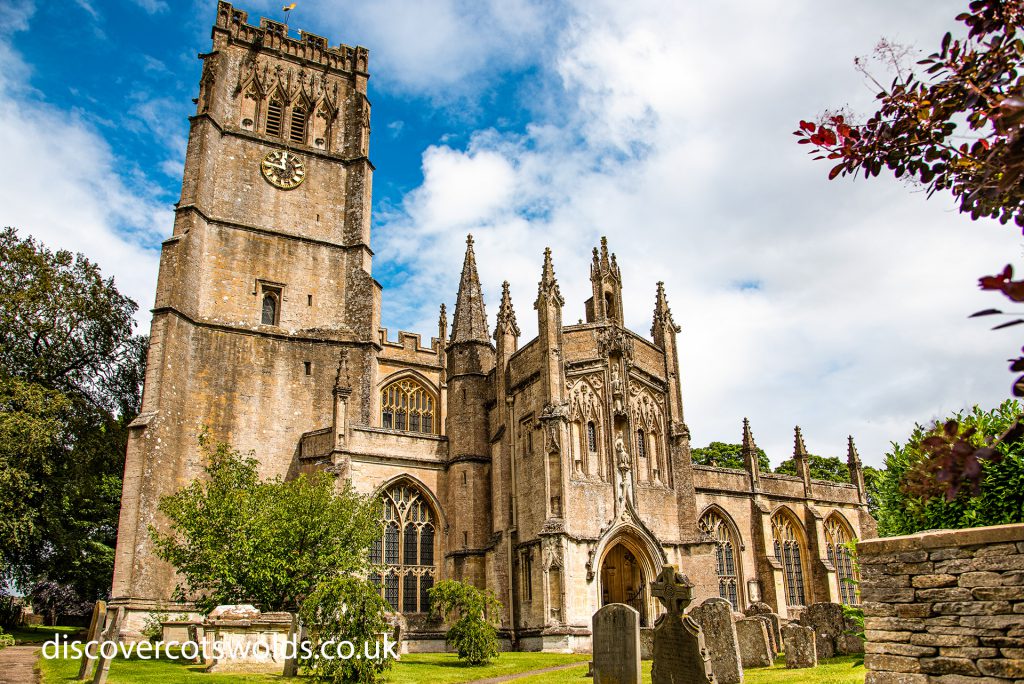
The church of St Peter and St Paul
Gloucester Abbey founded Northleach as a borough in about 1220, and the town spent the next two centuries getting wealthy on wool. The church is where that money went.
It was almost completely rebuilt from the late 14th century in Perpendicular Gothic. The west tower went up around 1380 to 1400, the nave and the south porch in the first half of the 15th century, and the lady chapel was finished in 1489. The nave clerestory, the row of high windows that fills the whole church with light, was paid for by John Fortey, a wool merchant.
The brasses are the thing to come for. They commemorate the merchants who paid for all this, shown in ordinary clothes with their wives, and many of them rest their feet on a woolpack, a sheep, or one of each. John Taylour died in 1400, Thomas Fortey in 1447, John Fortey in 1459, William Midwinter and Robert Serche both in 1501, Thomas Busshe in 1526. Several carry the merchant’s own woolmark, the personal stamp that went on his bales. It is an unusually complete set for one parish church, and you can stand in a small Cotswold town and read off the names of the men who financed it.
The architectural historian David Verey called it “next to Cirencester the most beautiful church in the Cotswolds”. It is Grade I listed.
The Old Prison
On the Fosse Way at the edge of town is the Northleach House of Correction, built in 1791 to a design by William Blackburn, working to the principles of the prison reformer Sir George Onesiphorus Paul. It was one of a set of new Gloucestershire prisons built on the then-radical idea that prisoners should be separated, kept clean and put to work rather than simply held.
The main cell blocks came down in 1936 and the police moved out in 1972. What survives is Grade II* listed and open to the public, free, seven days a week. You can walk into the original cells and the courtroom, and the yard holds the Lloyd-Baker collection: farm wagons, tip carts and implements gathered by Olive Lloyd-Baker of Hardwicke Court after the war, passed to Cotswold District Council on her death and moved here in 1981. The Friends of the Cotswolds look after it now, with the Corinium Museum. There is a replica wheelwright’s workshop and a working blacksmith’s forge alongside it.
The café is run by the Relish Group and there is a good deal of parking, which is the other reason it works as a first stop. Open daily, 9am to 4pm. Dogs are welcome in the café and the yard but not in the cells or the courtroom.
More on the site here: The Old Prison.
The market place and the market
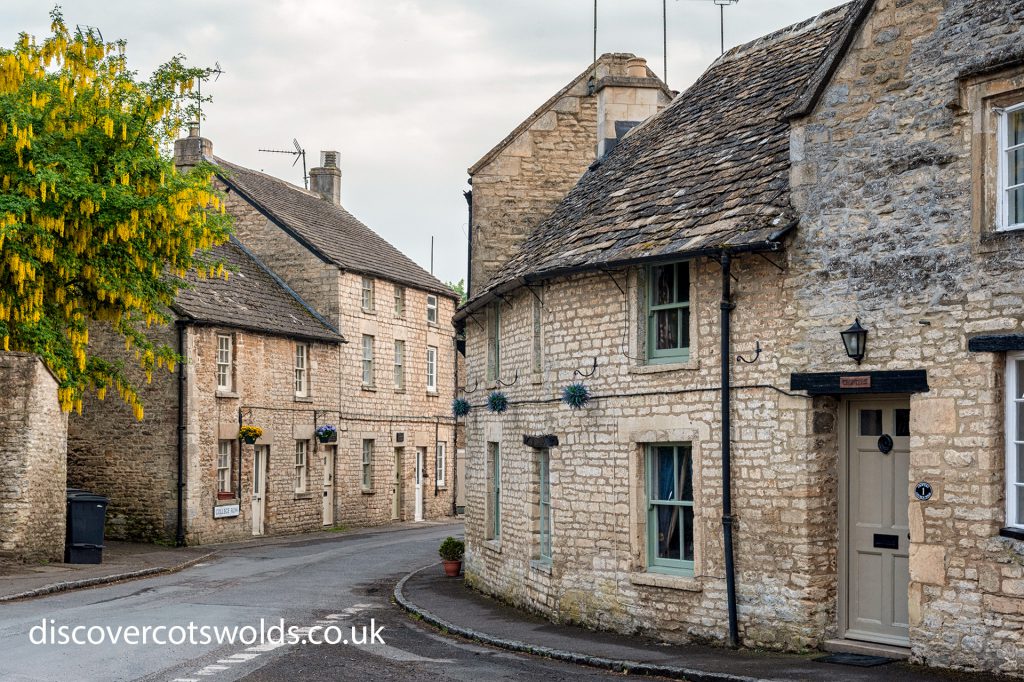
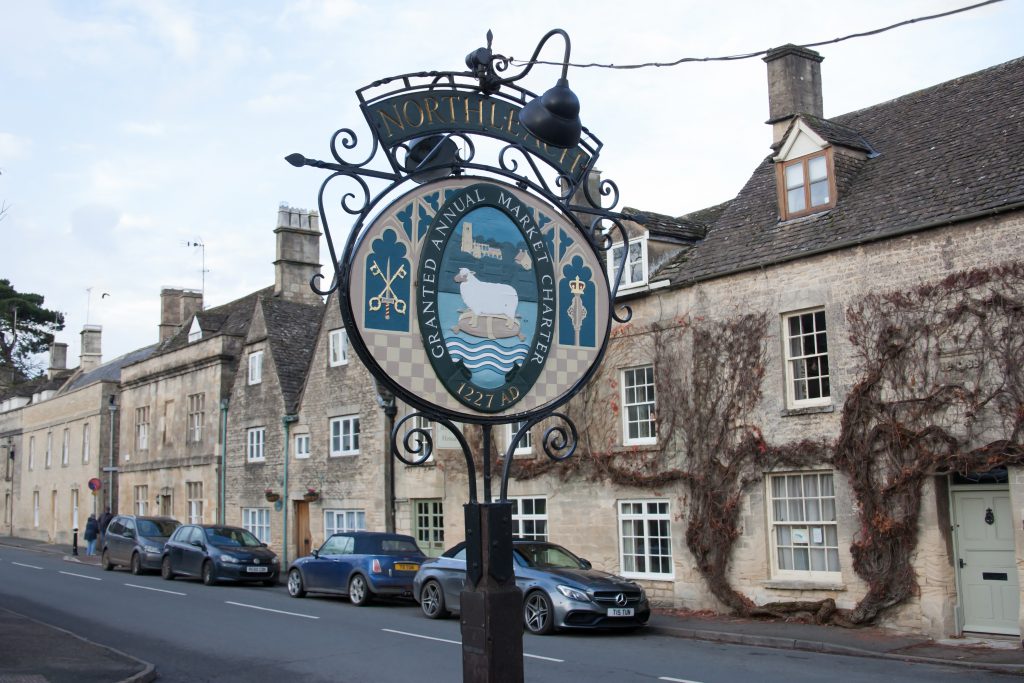
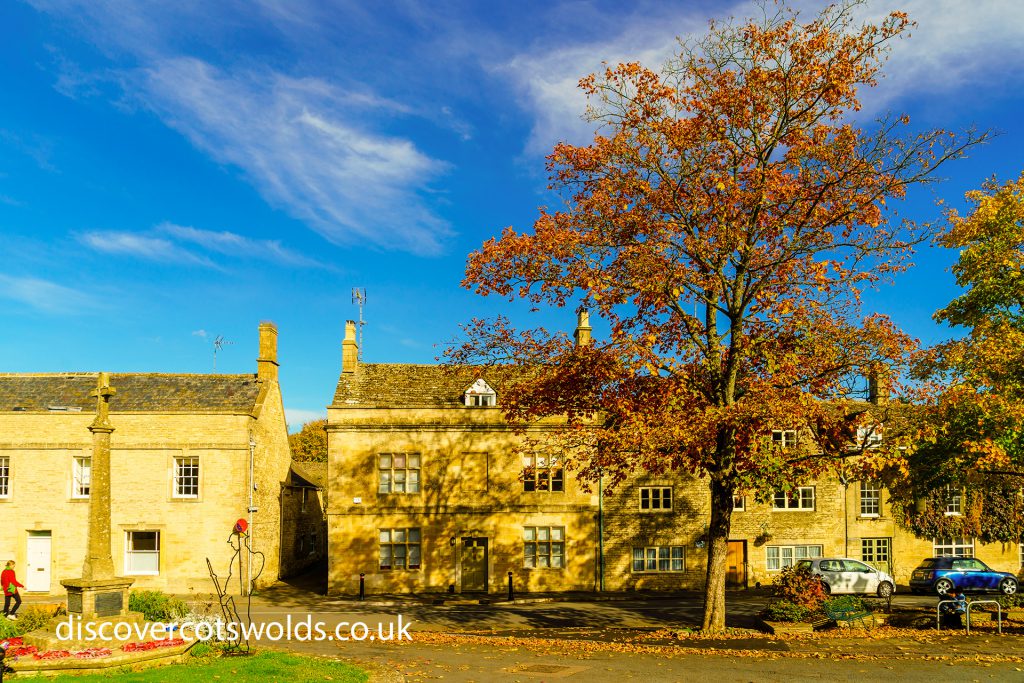
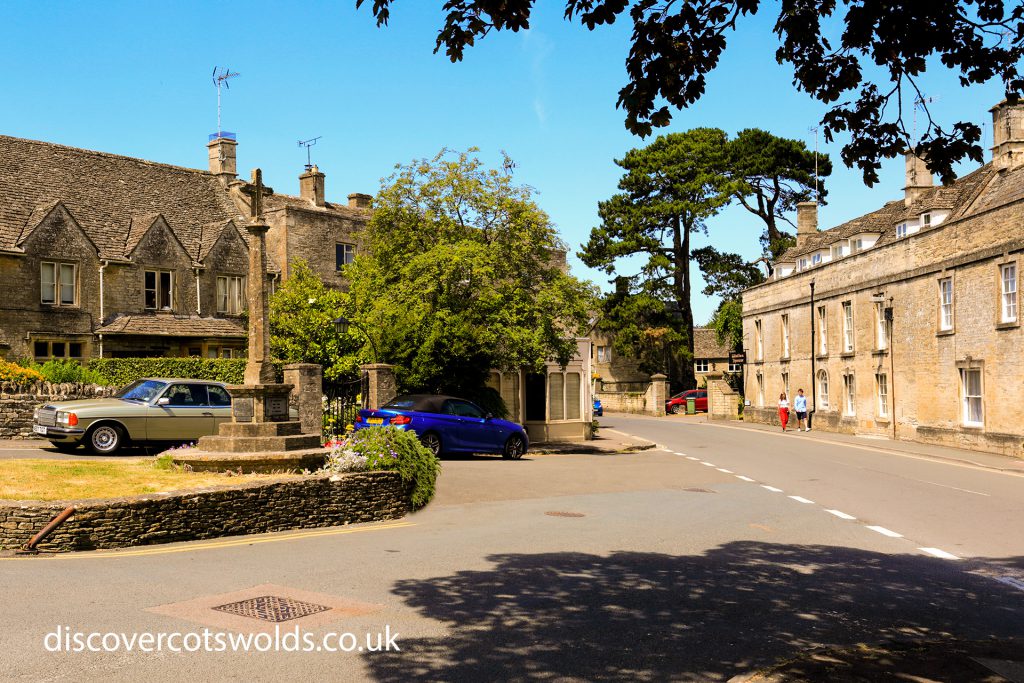
In 1227 Henry III granted the abbot and monks of Gloucester the right to hold an annual fair at Northleach and a weekly market every Wednesday. The market place is still the centre of the town, and the long High Street of merchants’ houses runs off it.
The weekly market itself lapsed. The town council has been recruiting traders through 2026 with the aim of starting it up again, so check the town council site before you plan a day around it.
This Country was filmed here
Daisy and Charlie Cooper’s mockumentary was shot in Northleach across three series and a special, from September 2016 until the show ended in 2020. The town plays itself, more or less, and it is recognisable street by street.
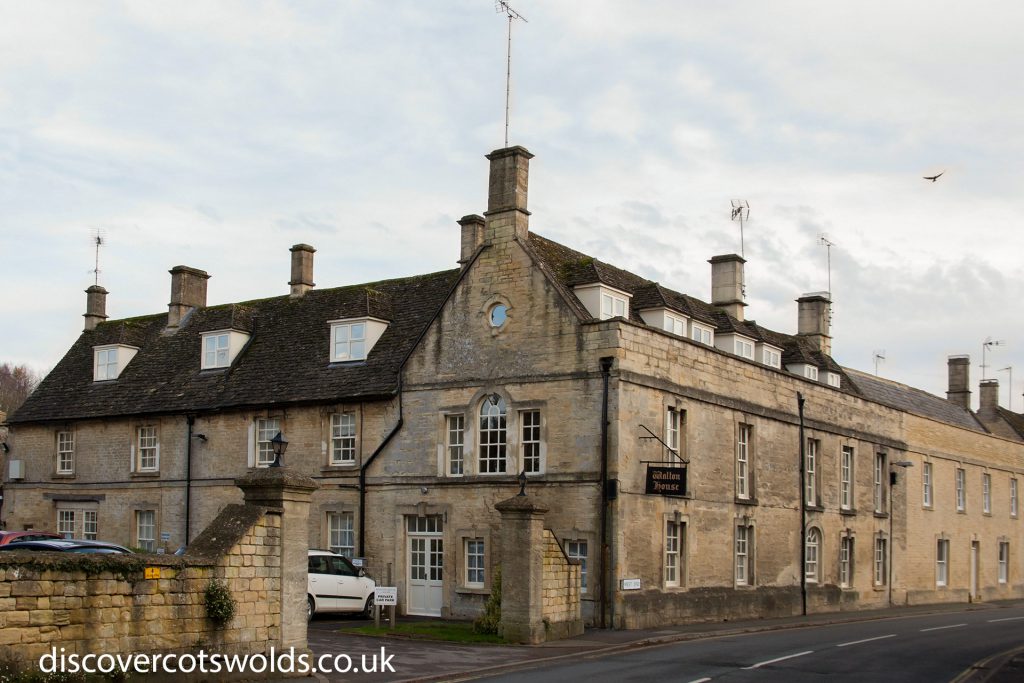
The Sherborne Arms in the market place is the pub that appears as The Keepers Arms. The bus shelter Kerry and Kurtan sit in is the one in the market place. Kerry’s house is on Fortey Road, about five minutes’ walk from the High Street, and it is somebody’s home, so look from the pavement and leave it at that. Not everything is here: the station scenes were shot at Kingham and the bowls club is in Fairford.
Northleach has a longer screen history than the one show. The market place was dressed as Pagford for the BBC’s adaptation of The Casual Vacancy in 2014 and again for Sky’s You, Me and the Apocalypse the following year, and L.S. Lowry painted A Street in Northleach in 1947.
Where to eat and stay
Featured partner

The Sherborne Arms
The Sherborne Arms has been Northleach’s coaching inn on the Market Place since about 1820, and yes, it’s The Keepers Arms from This Country. Expect open fires, a courtyard and simple seasonal British food with a taste for game and offal, plus three newly renovated rooms with super-king beds and roll-top baths upstairs. All this only minutes away from Burford, Bibury, Stow, etc
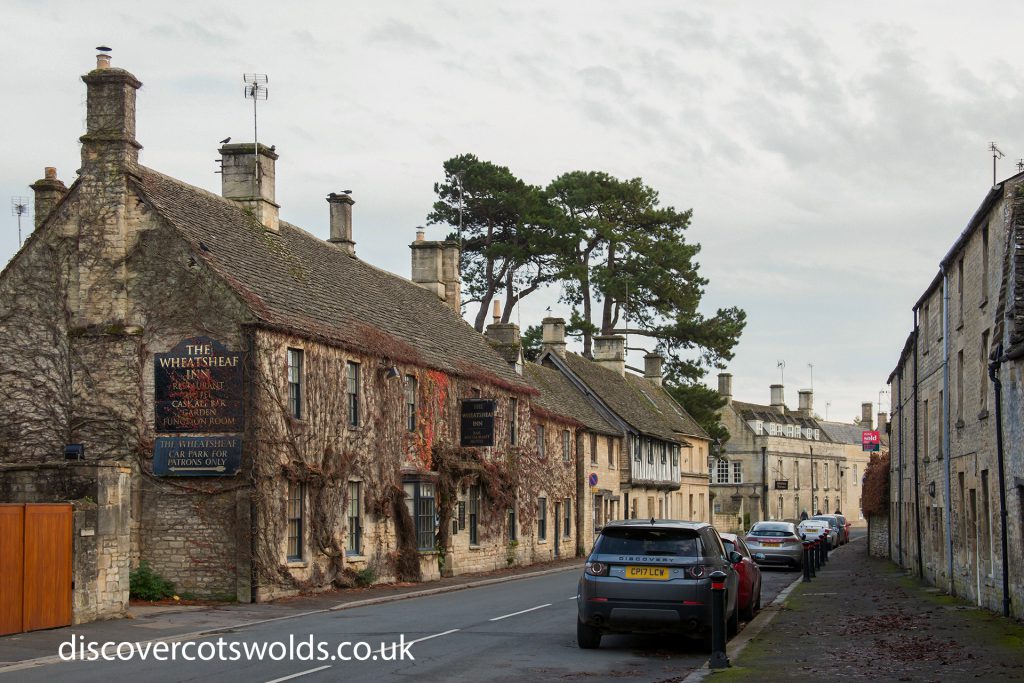
The Wheatsheaf Inn at West End is a 17th century coaching inn with fourteen bedrooms and a restaurant, reopened in 2011 by Sam and Georgina Pearman.
The Prison Kitchen & Café at the Old Prison does coffee, brunch and lunch, and has the easiest parking in town.
Getting here
Northleach has no railway station and never got one: a bill to build a line through the town was defeated in Parliament in 1860, largely on Great Western Railway objections. The nearest stations are Kingham on the Cotswold Line and Kemble on the Golden Valley Line, each about sixteen miles away by road.
By bus, Stagecoach West service S2 links Cheltenham and Oxford via Northleach, Burford and Witney, and Pulham’s routes 801 and 855 also call here. Services are sparse, so check timetables before you commit. If you are putting a trip together without a car, see the Cotswolds without a car.
By road it is signed off the A40 and the A429. There is parking in the town and a good deal more at the Old Prison.
Nearby
Chedworth Roman Villa
A short drive south of Northleach, hidden in the wooded Coln Valley, lies one of the finest Roman villas in Britain. Chedworth Roman Villa was uncovered by chance in 1864, said to have been uncovered when a gamekeeper digging for a lost ferret turned up fragments of Roman mosaic. What came to light was a sprawling 4th-century country estate arranged around a courtyard, with heated rooms, two separate bath houses and a spring-fed water shrine.
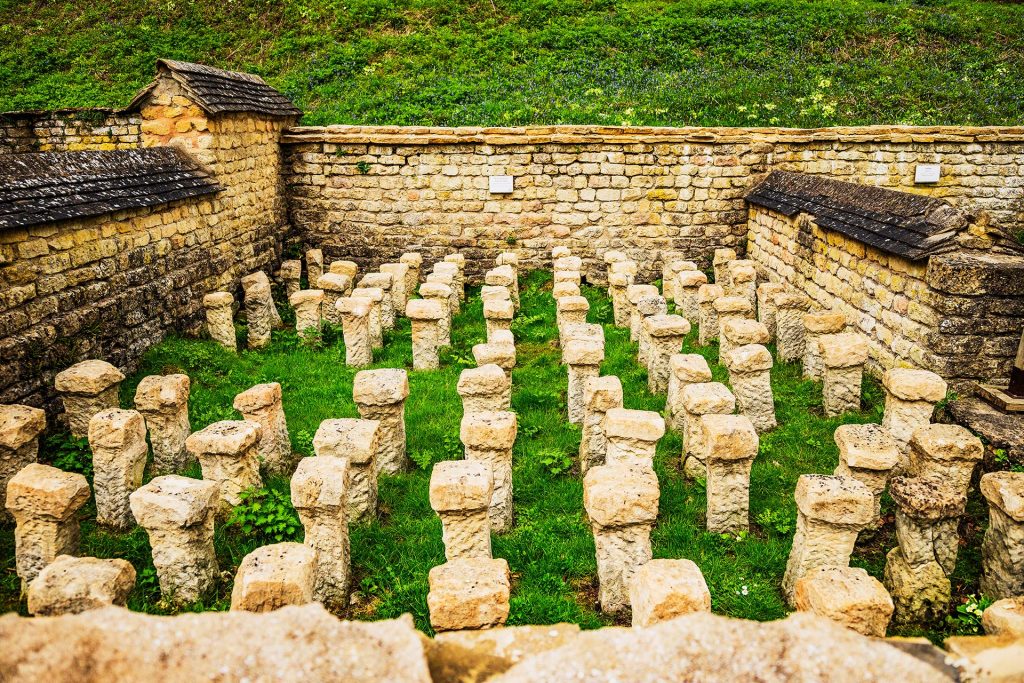
The mosaics are the highlight. The floors of at least 15 rooms were decorated, and excavations keep adding to the story. In 2010 archaeologists uncovered a mosaic corridor more than 30 metres long, the longest of its kind in Britain, and later digs found flooring laid as late as the 5th century, hinting that life carried on here well after Roman rule ended. A modern cover-building lets you walk above the mosaics and the underfloor heating system, and a small museum displays finds from the site.
Chedworth has been looked after by the National Trust since 1924. It usually opens from spring to autumn, so check current opening times before you travel. It pairs neatly with a morning in Northleach and a wander along the Coln Valley, and slots easily into a day spent exploring this corner of the Cotswolds.
Stowell Park
Stowell Park is a private estate of about 5,500 acres, owned by the Vestey family since 1921. The gardens open twice a year under the National Gardens Scheme, with lawned terraces above the Coln Valley and two walled gardens with a long rose pergola. Those two days are the only way in, so watch the scheme’s listings.
Lodge Park
Lodge Park at Aldsworth is a 17th century grandstand, built in 1634 so that its owner and his guests could watch deer coursing from the roof. It is National Trust, with walks across the Sherborne Park estate.
Further out, Bourton on the Water, Stow on the Wold and Bibury are all within about half an hour.
One that has gone
Keith Harding’s World of Mechanical Music spent years on the High Street repairing and exhibiting musical boxes and self-playing instruments. It closed in 2019 and the building is a private house now. It still turns up in guidebooks, so if you came for it, that is why you cannot find it.
See more Cotswold market towns.