Stanton is a small village in Gloucestershire, under the western side of the Cotswolds escarpment, between Broadway and Winchcombe.
It is one street, more or less. A single unbroken run of honey-coloured stone and thatch on a lane that goes nowhere in particular, with the hill rising steeply behind it. There is no shop, no school in use as one, and no post office. Walkers come through on the Cotswold Way and most of them keep walking. It stays quiet because there is nothing here set up to sell you anything, and that is the whole appeal.
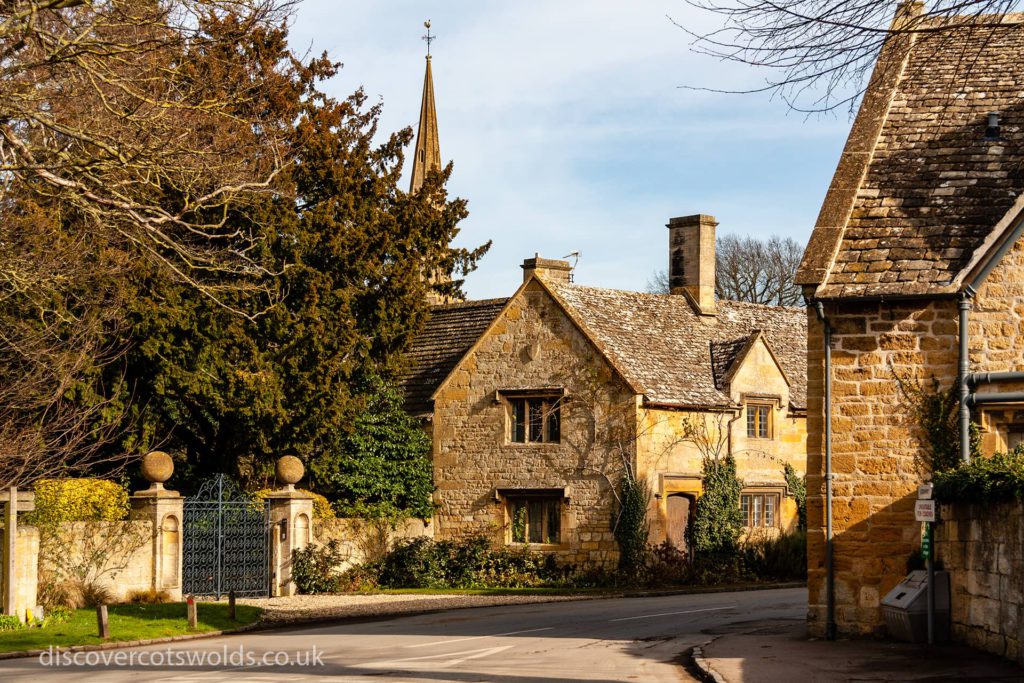
Plenty of Cotswold villages are described as undiscovered, but Stanton isn’t one of them. The Cotswold Way runs right through it, and only about 200 people live here. What makes it unusual is how little it has changed. Broadway has grown and Bibury draws coachloads of visitors, but Stanton still feels like a village built in one piece. That didn’t happen by accident.
You’re as likely to see horse back traffic making it’s way through the middle of the village as you are motorised vehicles.
Why the village looks the way it does
The name is Sir Philip Stott.
Stott was an architect and engineer who bought the Stanton estate in 1906, and the Stott family owned most of the village until 1949. He’s credited with rescuing Stanton from oblivion, which is a large claim, but the village you see today backs it up.
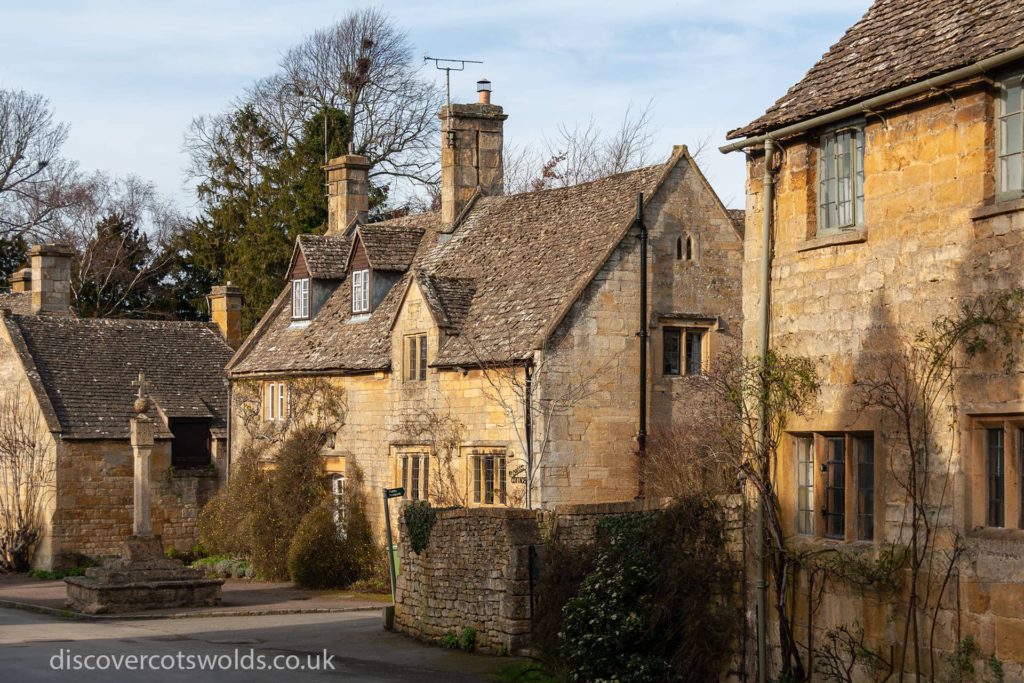
He restored the houses rather than replacing them, and he kept the whole street to one material and one period, so it reads now as a single thing built at one time, which it was not.
His additions are still here to be found. He built a reservoir in 1907, put lighting along the main street, improved the church, extended the school and added a swimming pool and a cricket field. The swimming pool and school are no more but the street lighting is the detail to look for: the copper wall lanterns on their wrought-iron brackets are his, and once you have noticed one you notice all of them.
It is worth mentioning what he didn’t do. He didn’t build the village in the first place, or restore it from ruins. It was already here. He stopped it changing, and that is a different and rarer thing.
Things to do in Stanton
Unsurprisingly, in a village of its size that isn’t specifically set up to attract visitors, there aren’t a great deal of visitor attractions in Stanton.
St Michael and All Angels
There has been a church on this site since about 1100. The oldest thing still standing in it is the north arcade, three Norman columns from around 1200. There are fragments of medieval wall painting and of the old rood screen inside.
The detail people come to see is on the pew ends. Poppy-head carvings adorn the medieval benches, and some tops show grooves from wear. They are said to have been cut by the chains of shepherds’ dogs, tied up while their owners were at the service. Whether or not every groove is a dog’s, it is the kind of thing that only turns up in a church that has been in constant use by working people for six hundred years.
The main street
The street is the sight. Walk it slowly and look up: the lanterns, the thatch, the way no two houses are quite aligned and yet the whole thing holds together. This is the thing Stott protected and photographs don’t really do it justice, so it’s worth the walk rather than the one shot from the end of the lane. Of course, if you’re walking the Cotswold way then you’ll be heading through the middle of the village anyway.
The Mount Inn
At the top of the village, up the hill, is the Mount Inn. A 17th-century pub and it’s a Donnington house, so it gets its beer from the brewery at Stow. The view from the garden terrace at the back is down over the roofs you have just walked up through and then out across the valley. It is also, in practice, most of the eating and drinking on offer in Stanton, so if you are timing a visit around lunch, time it around this. Closes at 4pm on a Sunday.
Walking from Stanton
This is why most people come, and the village makes a good deal more sense as a stop on a walk than as a destination in itself.
The Cotswold Way runs straight through Stanton. The leg down from Broadway is one of the better-known stretches of the whole path, coming along the top and dropping into the village, and it carries on south towards Stanway and Winchcombe. Above the village sits Shenberrow, an Iron Age hill fort of about two and a half acres, on the escarpment the path climbs.
There is also a circular walk that links Stanton with Snowshill and Stanway, taking in three villages and a good deal of the escarpment in one loop. It is a popular route and there is no shortage of people asking about it, so if you want a day’s walk rather than a stroll through the village, this is the one.
There is no realistic way to reach Stanton by public transport, so a walk here means either walking in from Broadway or driving to the village and parking. If you are trying to see this part of the Cotswolds without a car, the getting around without a car page is the place to start, and the short answer for Stanton is: come on foot from Broadway.
Where to eat and drink and where to stay
The Mount Inn, above, is the pub. Beyond it there is no shop and no café in the village, so bring what you need or eat at the pub. For staying, Stanton has B&Bs and self-catering cottages rather than hotels, which suits the place: it is a quiet village and the quiet is part of the attraction after the day visitors and walkers have moved on.
Getting here and parking
Stanton is signed off the B4632 between Broadway and Winchcombe, on a no-through lane, so you turn off and the road stops at the village.
There is a small village car park, on the edge of the village, next to the cricket club.
There are no public conveniences in the village, so factor that into your plans.
When to visit
Stanton does not have a crowd problem, so this is not about avoiding anyone. It is about the light. The whole village is one colour of stone (apart from the occasional half-timbered building), and that colour is worth a lot more in low morning or late-afternoon sun than under a flat midday sky. Come early or come late, and you get the street more or less to yourself as well.
Places to visit near Stanton
Snowshill is just over the hill, with its manor and its famous collection. Broadway is a couple of miles north and is where you would walk in from on the Cotswold Way. Stanway, with its water garden and the tallest fountain in Britain, is the next village south on the path. Winchcombe and Sudeley Castle are a little further on again.
Further into the Cotswolds, Bibury and Castle Combe are the two names that come up when people talk about the prettiest villages, and Stanton belongs in that conversation for anyone who would rather do their looking on foot and without the coaches.
Stanton FAQ
Is Stanton worth visiting?
Yes, particularly if you are walking. It is one of the most complete and least altered villages in the Cotswolds, and it is on the Cotswold Way, so it works best as a stop on a walk rather than a drive-to destination in its own right.
How long do you need in Stanton?
Half an hour to an hour is enough to walk the village. It is a single street. If you are here for a walk, that is a half or full day depending on the route.
Does Stanton have a pub or a shop?
A pub, the Mount Inn, at the top of the village. No shop and no café, so bring supplies if you are walking.
Can you walk from Broadway to Stanton?
Yes, on the Cotswold Way. It is one of the best-known legs of the path, along the top and down into the village. It is also the sensible way to arrive, since there is no public transport.
Why does Stanton look so untouched?
Because Sir Philip Stott owned it from 1906 to 1949 and restored it to a single material and period rather than letting it change. What you are looking at was deliberately kept.
Is Stanton on the Cotswold Way?
Yes. The path runs through the village, between Broadway to the north and Stanway and Winchcombe to the south.
Is it Stanton or Stanway?
Both, and they are different places two miles apart on the same path. Stanton is the long street under the escarpment. Stanway is the next village south, known for its manor and the fountain in its water garden. People often confuse the two.
See more Cotswold villages.