Quick Summary
The Cotswolds is an 800-square-mile patchwork of rolling hills, honey-coloured stone villages, and ancient market towns spread across the heart of England. It sits within the protected Cotswolds National Landscape and remains one of the country’s most-loved rural destinations.
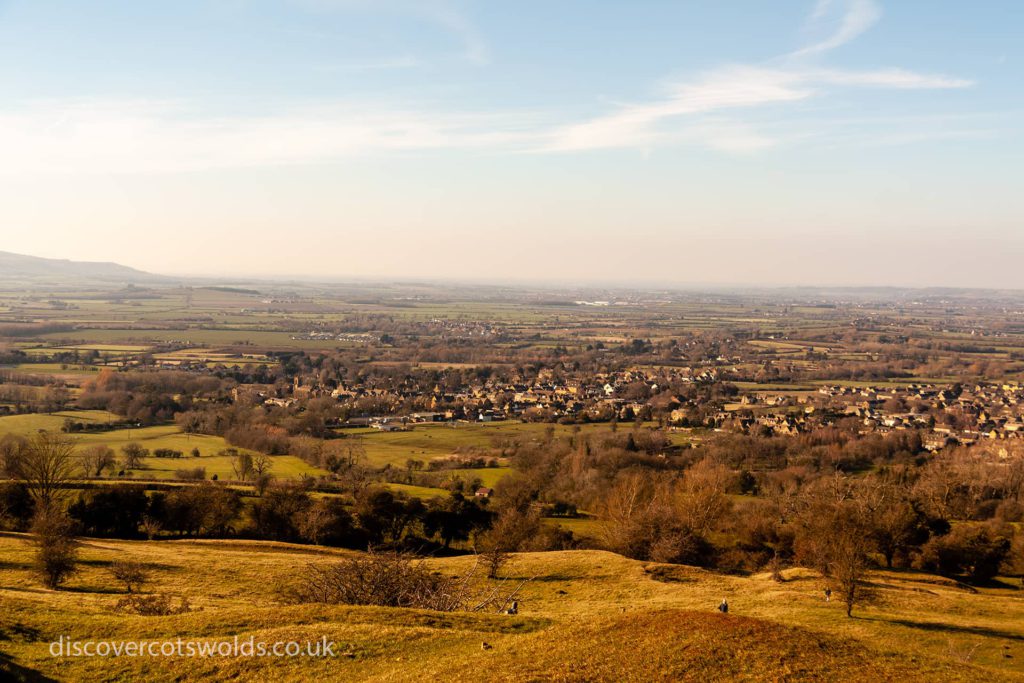
Three reasons people love to visit: the picture-perfect villages built from local Cotswold stone, the network of long walks across the Cotswold hills, and the chance to slow down in a countryside that still feels lived-in.
This guide walks you through the must-see villages, the best day trips, where to stay, and the practical bits that make the difference between a good visit and a great one.
Explore the Cotswolds
The Cotswolds sits within easy reach of two major cities. From London, the drive takes around two hours, or you can hop on a train to Moreton-in-Marsh, Kemble, or Cheltenham Spa. Bristol travellers can be in the southern Cotswolds in under an hour.
That access is part of the appeal. You can leave a city in the morning and be walking a country lane by lunchtime.
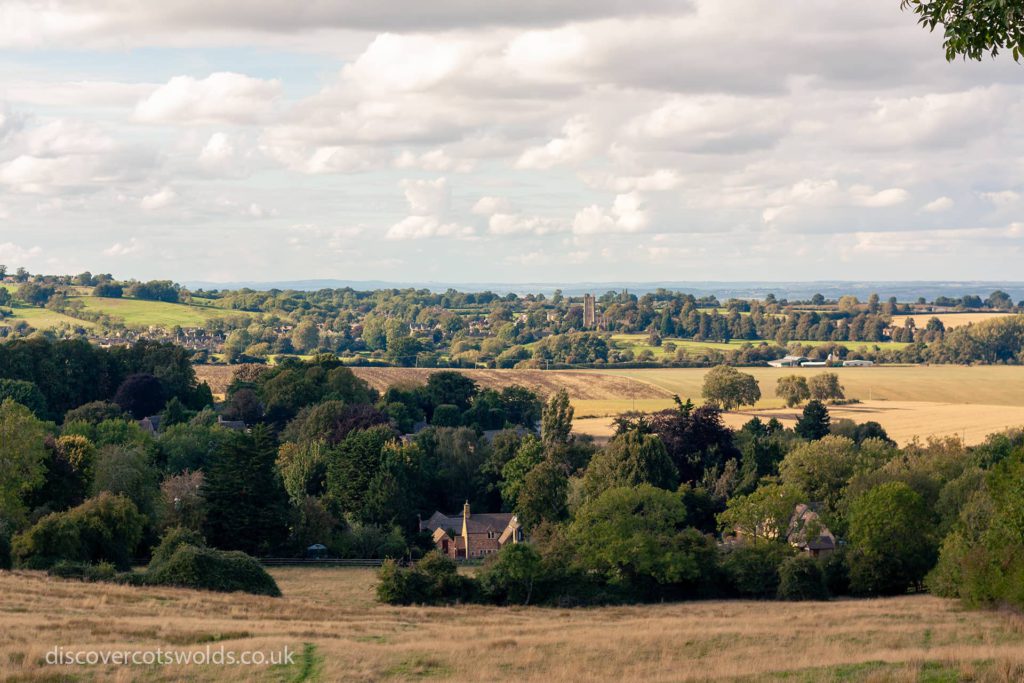
Trip length depends on what you want. A weekend gets you two or three villages and a good meal. Three to five days lets you mix walks, gardens, and a day trip or two. A full week opens up the whole region, from the southern villages near Bath to the northern edge above Broadway.
Geographically, think of the region in three rough bands. The northern Cotswolds,
around Broadway and Chipping Campden, has the deepest stone and the highest viewpoints. The central belt around Stow-on-the-Wold and Bourton-on-the-Water is
where most visitors spend their time. The southern Cotswolds, from Castle Combe down to Bath, is quieter and easier to reach from Bristol. Bradford on Avon sits at the bottom of it, with its own station a few minutes from Bath.
Cotswolds National Landscape
The Cotswolds National Landscape was designated in 1966 as an Area of Outstanding Natural Beauty and renamed in 2023 when all AONBs in England and Wales became National Landscapes. At roughly 800 square miles, it is one of the largest protected landscapes in the country, with over 5,000 years of Cotswolds history and scenery layered into its hills and valleys.
The region spreads across six counties: Gloucestershire, Oxfordshire, Worcestershire, Warwickshire, Wiltshire, and a sliver of Somerset. The escarpment runs from Chipping Campden in the north to Bath in the south. The highest point sits on Cleeve Hill above Cheltenham, at around 1,083 feet.
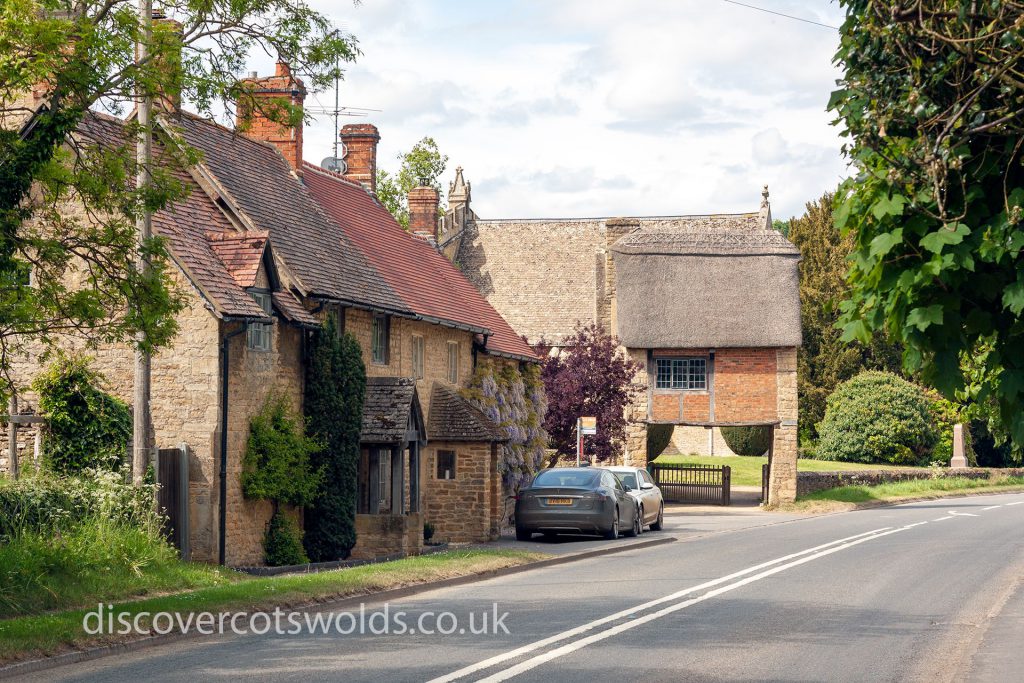
West Oxfordshire, Long Compton, and Cirencester all fall within the boundary. For walking routes, conservation projects, and visitor information, the official Cotswolds National Landscape website is the place to start.
Cotswold Stone
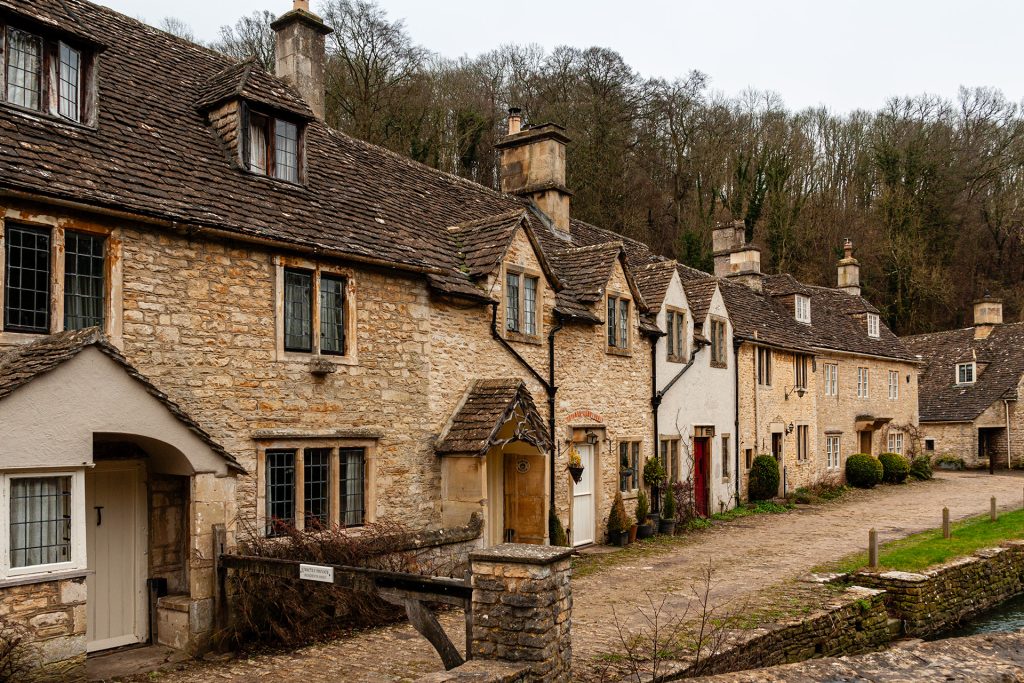
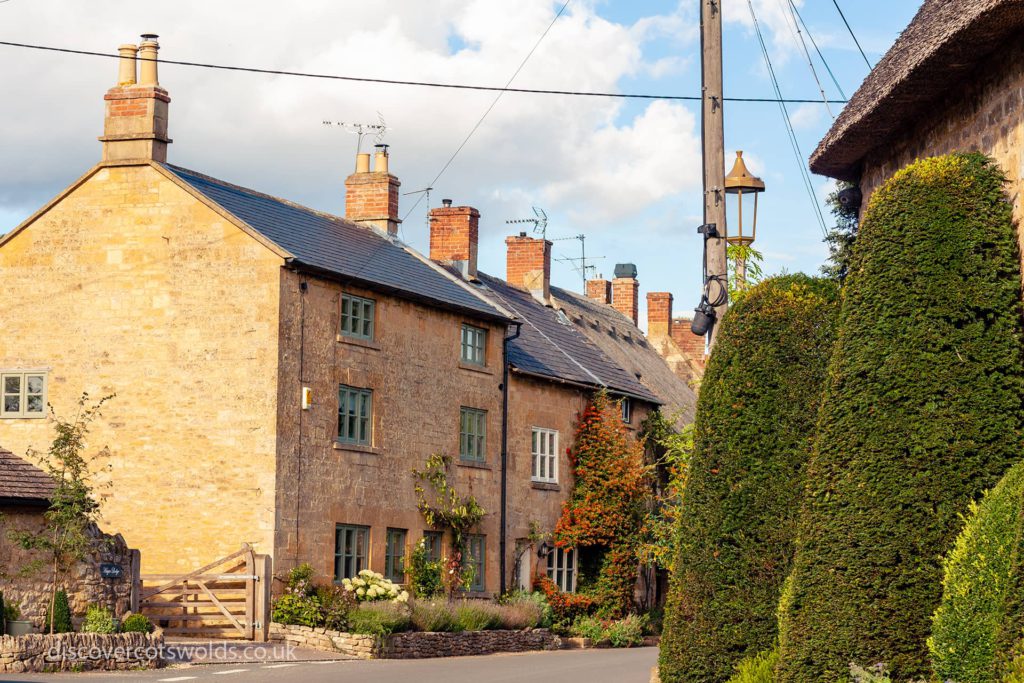
Almost every village you’ll see is built from the same material: Jurassic limestone quarried locally for centuries. Locals call it Cotswold stone, and its honey-coloured tone is what makes the buildings glow at sunset.
The colour shifts as you move through the region. In the north, around Broadway and Chipping Campden, the stone has a deep golden hue. Travel south towards Castle Combe and Bath and the tone lightens to a paler cream.
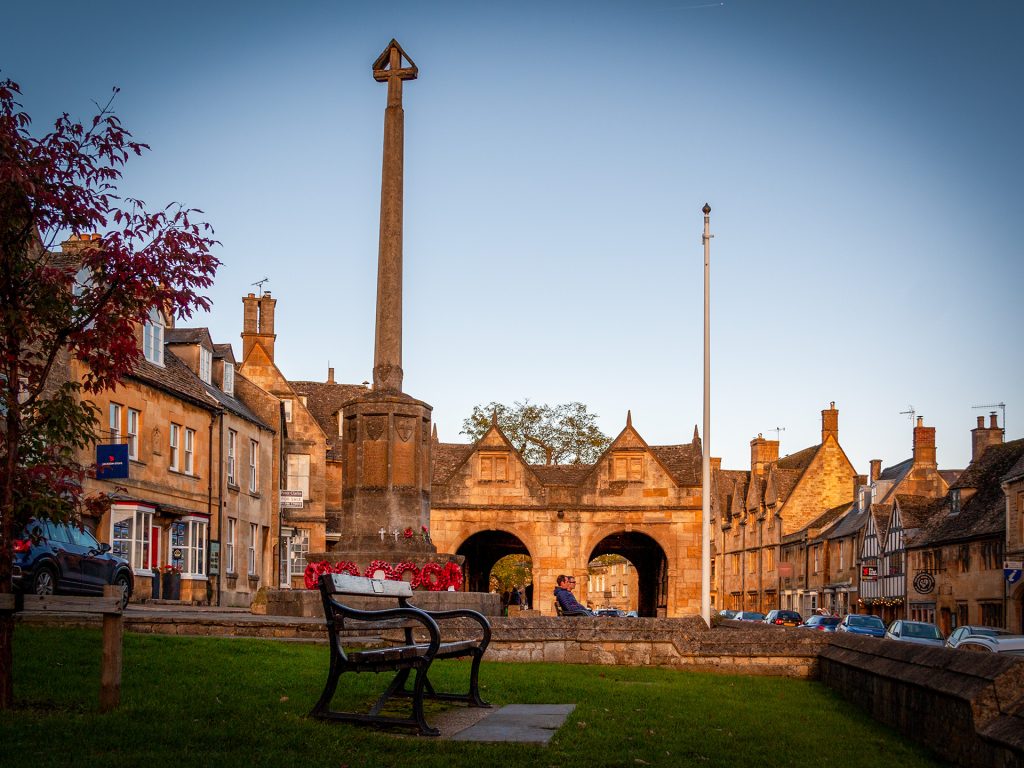
Photographers chasing the warmest tones tend to head north. Anyone after a softer palette works the southern Cotswolds. Either way, the harmonious blend of local stone, narrow lanes, and stone cottages is what gives the region its signature look.
For a side-by-side comparison, walk the high street at Chipping Campden in the morning and Castle Combe in the afternoon. The colour difference is obvious, and so is the change in the light.
Cotswold Village Highlights
A typical Cotswold village shares a few common features: a market cross or village green, a Norman church tower, narrow lanes lined with stone cottages, and a manor house tucked behind a high wall. Many also have a stream or river running through, and at least one cosy pub serving Sunday roast, echoing the feel of five must-visit Cotswold villages.
These villages are still residential. People live in those cottages, and tour buses can overwhelm small lanes during summer weekends.
A few simple courtesies go a long way. Stay on public footpaths. Keep voices down outside houses. Don’t lean on garden walls for photos. Park only in marked spots.
For quieter visits, arrive before 10am or after 4pm, especially in honey pot spots like Bibury and Castle Combe. Weekday mornings outside school holidays are the closest you’ll get to having one of these picturesque villages to yourself.
If you would rather skip the crowds entirely, Guiting Power, Ebrington and Blockley offer the same honey coloured stone with a fraction of the visitors.
Must-See Attractions
Some places earn their reputation with a single view. Others reward you with layers of history once you slow down. These seven local attractions are the ones we send first-time visitors to, especially if you’re planning sightseeing and travel in the Cotswolds.
Broadway Tower
Broadway Tower, a Cotswold landmark experience, sits on the Cotswold escarpment at one of the highest points in the region. Designed by James Wyatt in the late 1790s as a folly for the 6th Earl of Coventry, the tower now offers sweeping views across multiple counties on a clear day.
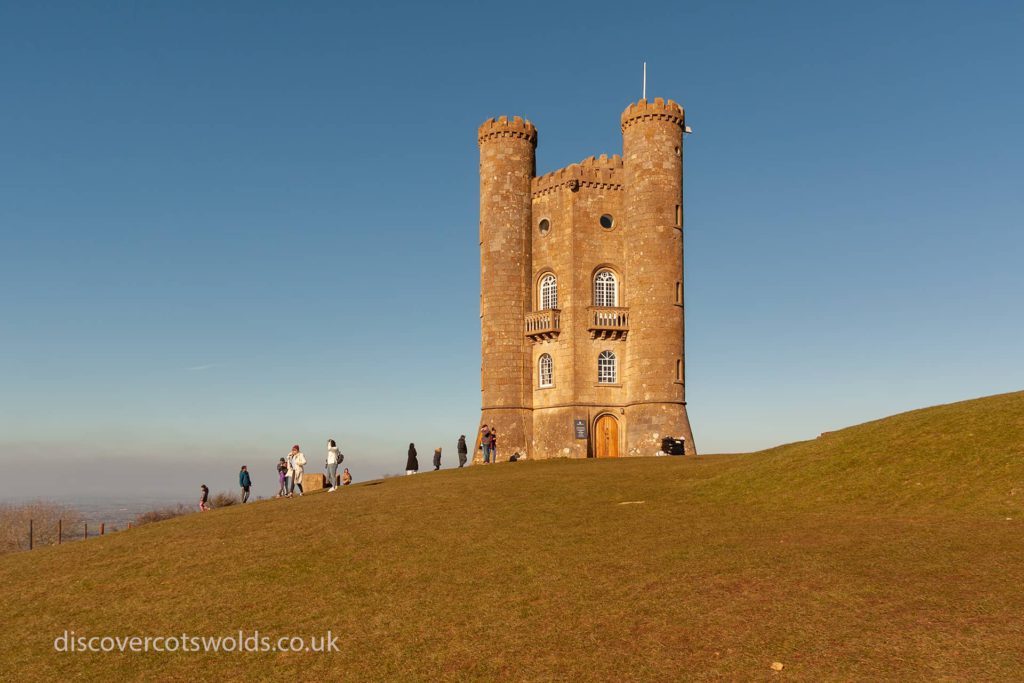
The walk up from Broadway village takes about 45 minutes through open parkland and is doable for most fitness levels. For golden-hour photos, plan to arrive 90 minutes before sunset and walk the loop around the tower as the light drops onto the stone.
Arlington Row
Arlington Row, in the village of Bibury, is one of the most photographed villages in England. The row of weavers’ cottages was originally built in the 14th century as a monastic wool store and converted to housing in the 17th century. The cottages are still lived in.
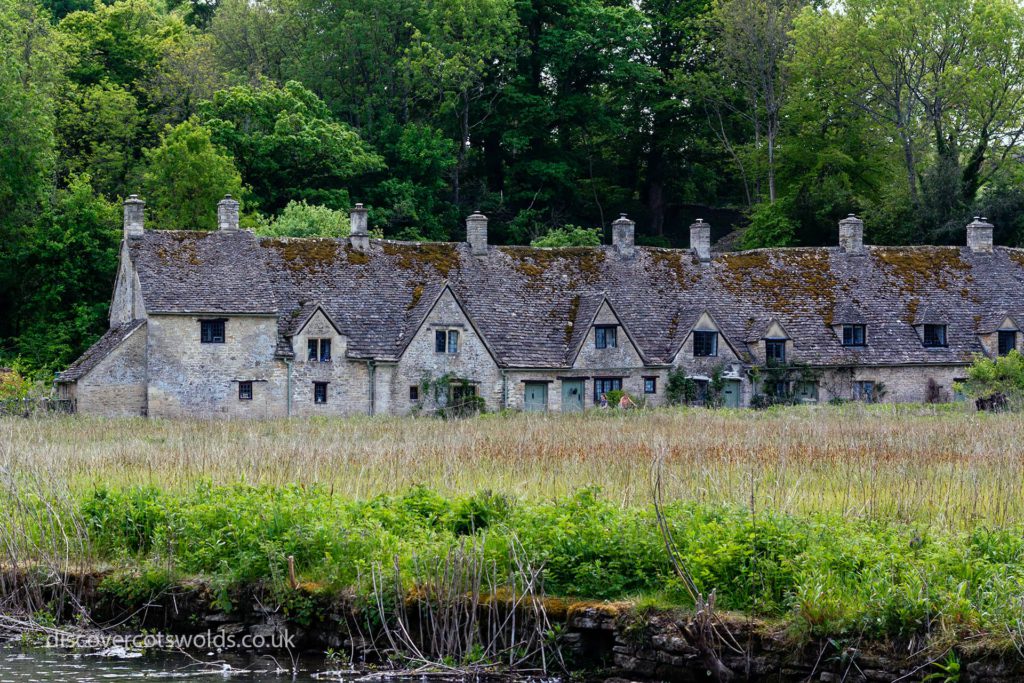
Park at the public car park near Bibury Trout Farm and walk back along the footpath. The row sits beside a stream and faces a meadow, which means almost any angle works.
Avoid weekend middays if you can. The best light is early morning before coach traffic arrives, and visitors are asked to keep noise down out of respect for the residents.
Castle Combe
Castle Combe in Wiltshire is often called the prettiest village in England. It’s small, walkable, and almost entirely unchanged since the 17th century, which is why it has been used as a film location for productions including War Horse and Stardust.
A short walking route through the village covers the highlights. Start at the upper car park, walk down past the market cross and the Castle Inn, follow the lane down to the bridge over the Bybrook river, then loop back up past St Andrew’s Church.
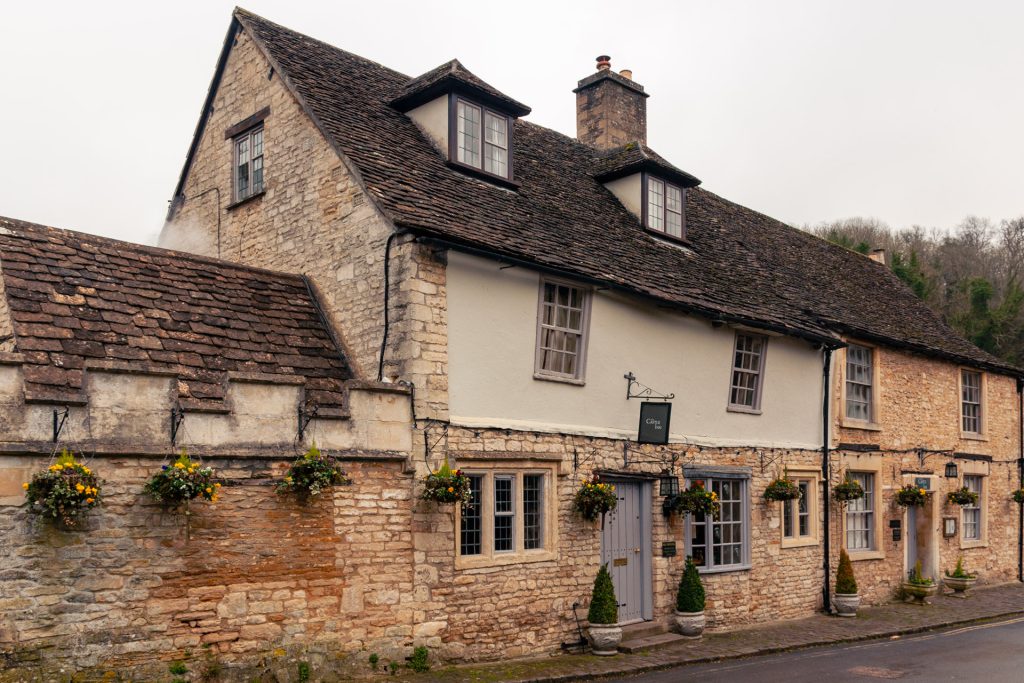
Allow 45 minutes for the walk and another hour for a drink at the Castle Inn. Photographers should aim for early morning or late afternoon, when the low sun lights the stone bridge from the south.
The village gets very busy during the day time, especially during the summer months.
Bourton-on-the-Water
Bourton-on-the-Water gets called the Venice of the Cotswolds because the River Windrush runs straight through the centre, crossed by five low stone bridges. It’s the most family-friendly of the headline villages, with shops, ice cream stops, and the Model Village, a 1:9 scale replica of Bourton built in the 1930s.
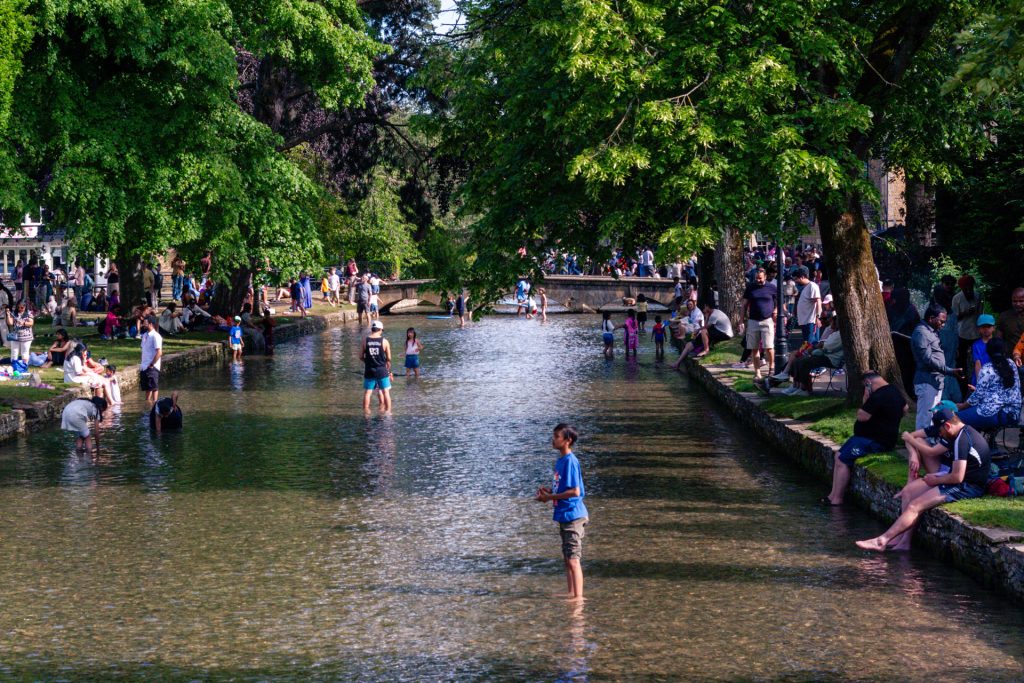
It’s also one of the busiest villages in summer. For quieter streets, plan a midweek visit and arrive before 10am or after 5pm. Evenings are particularly lovely once the day-trippers have left.
Chipping Campden
Chipping Campden is the kind of historic market town that still feels like a working community. The high street is one of the finest in the region, lined with stone buildings dating back to the wool trade boom of the 14th and 15th centuries.
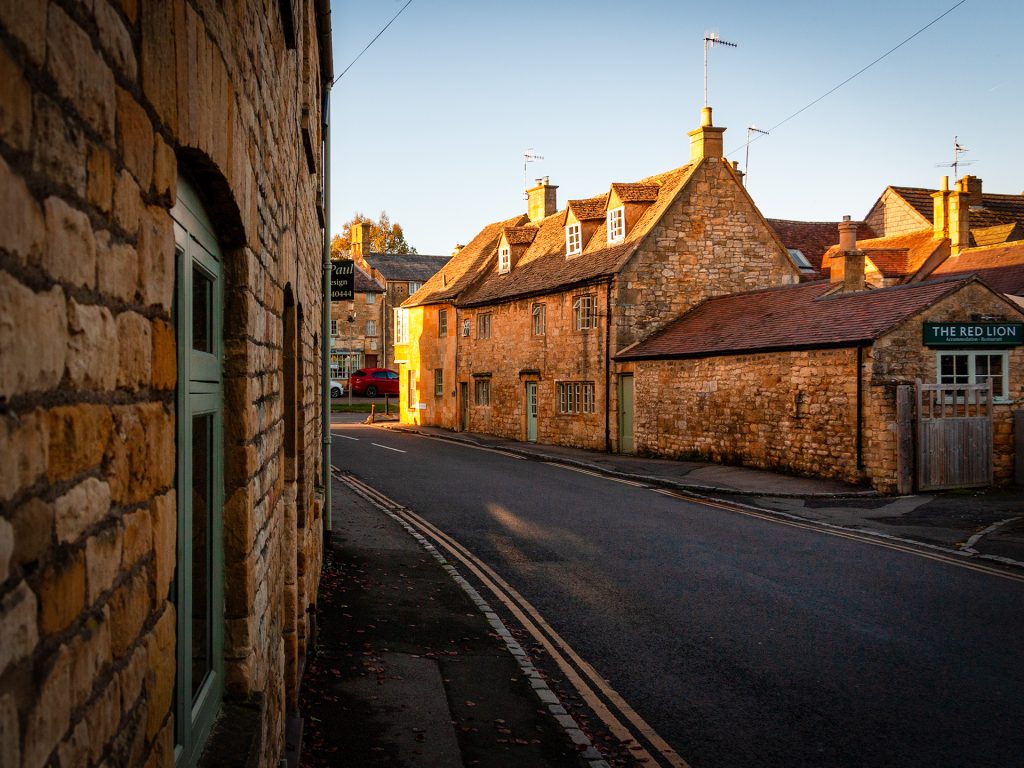
The 17th-century Market Hall, built in 1627, sits at the centre of town. It’s worth slowing down for the antique shops, jewellers, and galleries that have moved into the old wool merchant houses.
Chipping Campden is also the official starting point of the Cotswold Way National Trail, which makes it a natural first or last stop for walkers.
Cotswold Farm Park
Cotswold Farm Park near Stow-on-the-Wold is a rare breeds centre founded by Joe Henson in 1971 and now run by his son Adam Henson, of BBC Countryfile. It’s a working farm focused on conserving traditional British livestock breeds: Gloucester Old Spots pigs, Cotswold Lion sheep, Highland cattle, and others.
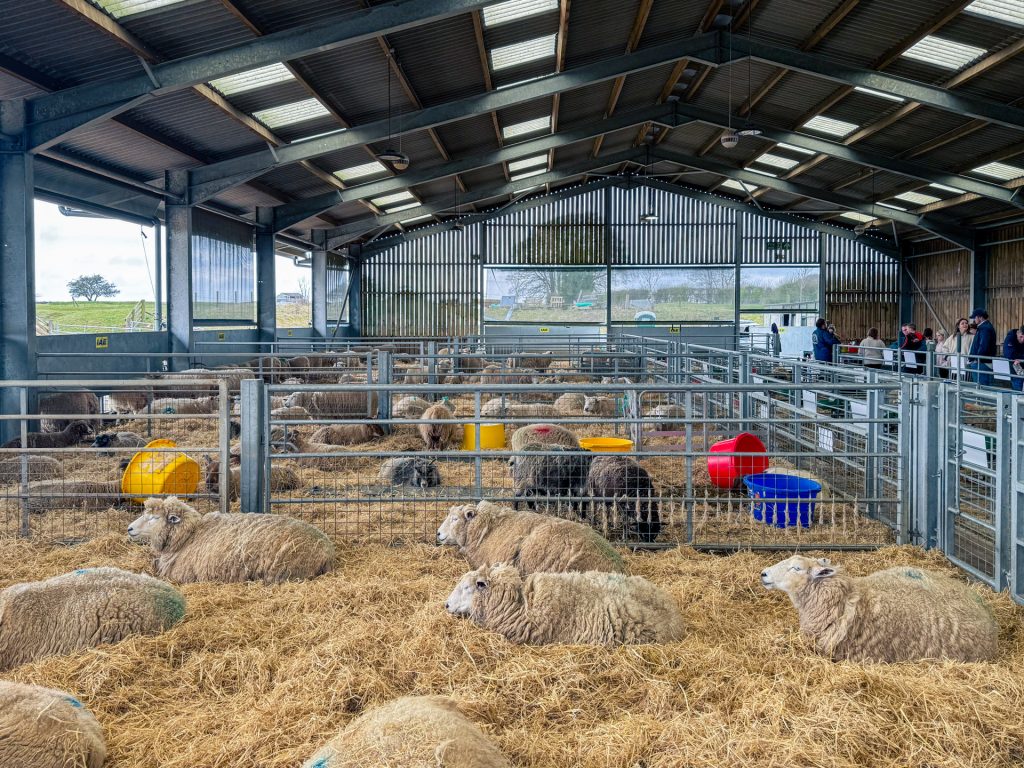
The park is built around families, with tractor rides, lambing demonstrations in spring, an adventure playground, and seasonal events. It is typically open from February through October, with reduced winter hours. Check the official site for current ticket prices and seasonal schedules.
Ingleside House
Ingleside House is a Grade II listed Regency town property in Cirencester that has been restored as a boutique destination for events and short stays. The honey-coloured stone exterior and beautiful grounds make it a striking backdrop, and the interiors mix period detail with modern comfort.
It works well as a base for exploring the southern Cotswolds, with Bibury, Bourton-on-the-Water, and the village of Lacock all within an easy drive. For room photos, current rates, and reservation details, visit the property’s website directly.
Activities and Walks
The Cotswolds is built for walking. The terrain is gentle by hill standards, the paths are well-marked, and you’re rarely more than a mile from a pub, all set against picturesque landscapes and historic Cotswold villages.
There are also easy options for visitors with limited mobility, including paved riverside walks in Bourton-on-the-Water and accessible viewpoints near Broadway Tower.
The Cotswold Way
The Cotswold Way is a 102-mile National Trail that runs from Chipping Campden in the north to Bath Abbey in the south. Most thru-walkers complete it in seven to ten days, but you don’t need to walk the whole thing to enjoy it.
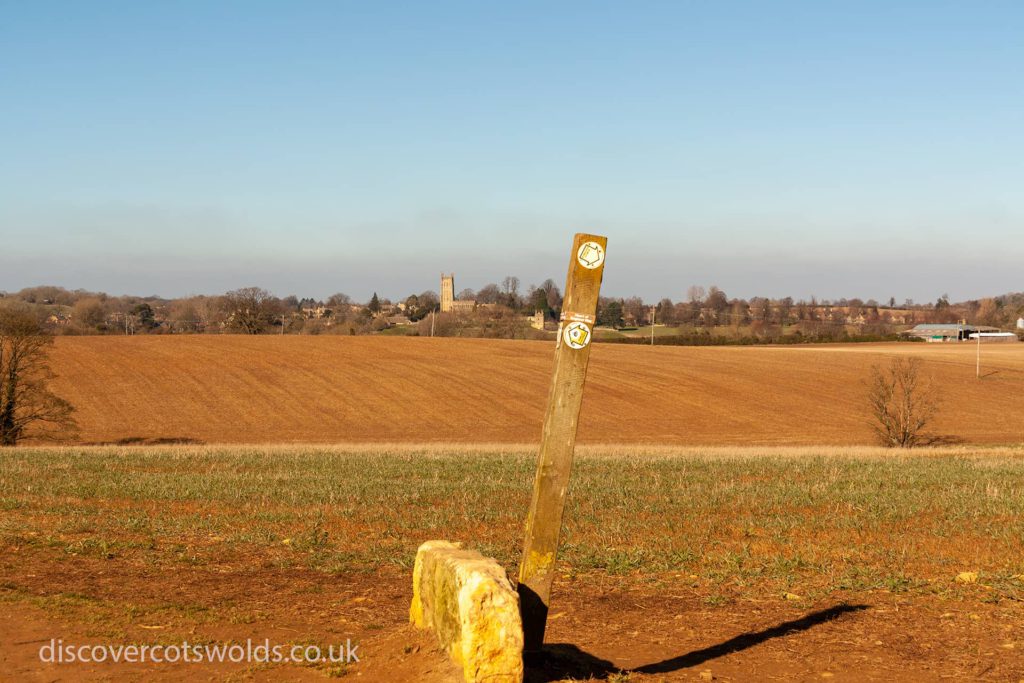
Three popular day-hike segments stand out. Chipping Campden to Broadway via Broadway Tower is about 5 miles, finishing with one of the best views on the trail. Painswick to Cranham covers around 5 miles through beech woods. Cold Ashton to Bath runs 8 miles and ends at the Roman city.
For multi-day stops along the Way, Winchcombe, Painswick, and Wotton-under-Edge are well-served with B&Bs and pubs. Booking ahead is essential during summer weekends, when walkers and weekend visitors compete for the same beds.
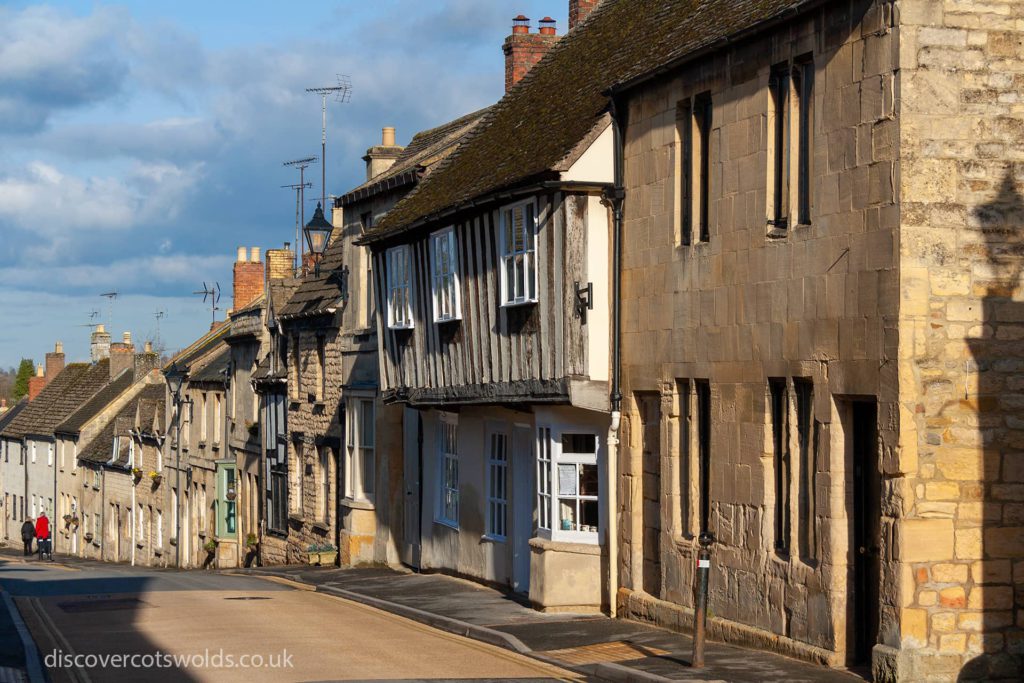
Beyond the National Trail, the region is laced with shorter circular walks and plenty of walking opportunities in the Cotswolds. Most local pubs keep paper maps of nearby loops, and the Cotswold Voluntary Wardens publish a free set of routes online. A short walk from almost any village will get you onto a footpath through fields and woodland within minutes.
Day Trip Ideas
A one-day southern Cotswolds plan: drive to Castle Combe in the morning, walk the village, then continue 20 minutes to Lacock for lunch at the George Inn and a wander through the National Trust village.
A half-day in Bourton-on-the-Water: park at the public car park on the edge of the village, walk along the river, visit the Model Village, and grab a cream tea at one of the tearooms by the green.
A circular drive taking in Broadway Tower: start in Broadway village, drive up to Snowshill, loop through Stanway and Stanton, then climb up to Broadway Tower for sunset. Allow four hours including stops.
For rail-linked day trips, Cheltenham Spa station gives you access to Winchcombe and Sudeley Castle, along with many of the top attractions and destinations in the Cotswolds. Bath Spa station is the southern gateway, with onward bus links to Castle Combe and the southern Cotswolds villages. Moreton-in-Marsh is the easiest direct option from London.
If you prefer a slower pace, build the day around one anchor: a long lunch at a country pub, an afternoon at a manor house with beautiful grounds, or a single long walk with a tea stop at the end. Trying to fit five villages into a single day usually leaves you tired and unimpressed.
Where to Stay
Picking a base matters more than picking the perfect village. Three towns work well for most trips.
Stow-on-the-Wold sits at the centre of the region and is a natural pick for first-timers. It has good restaurants, antique shops, and easy access to Bourton-on-the-Water and the Slaughters.
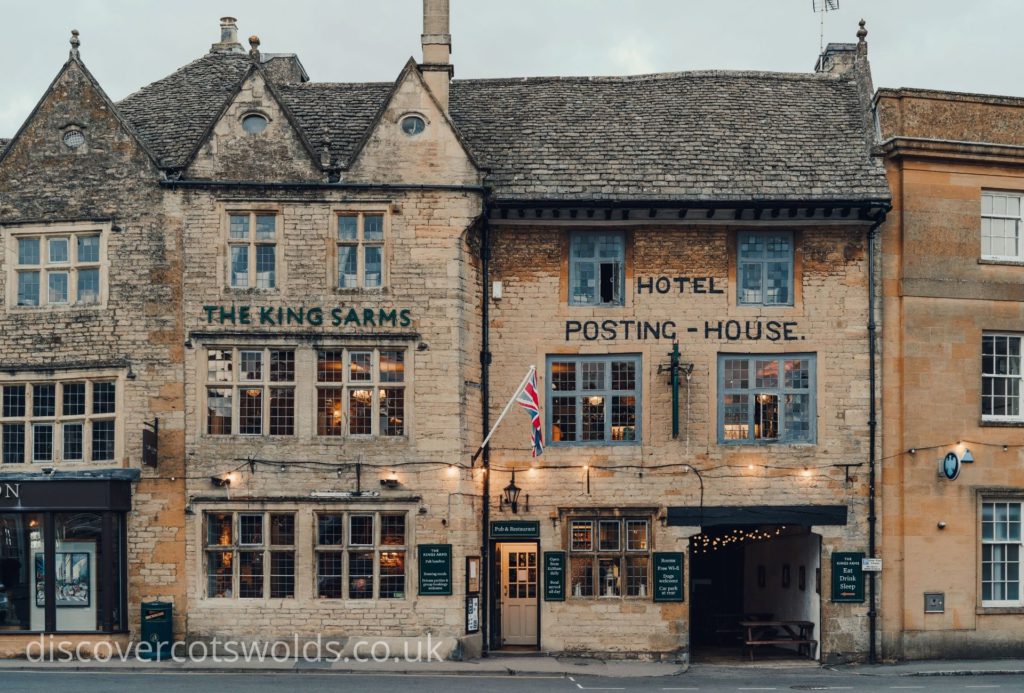
Broadway is the better choice if you want to focus on the northern Cotswolds and walk the Cotswold Way. The high street is one of the prettiest in the region.
Moreton-in-Marsh has the only mainline rail station in the central Cotswolds, with direct trains to London Paddington in around 90 minutes. It’s the obvious base for car-free trips.
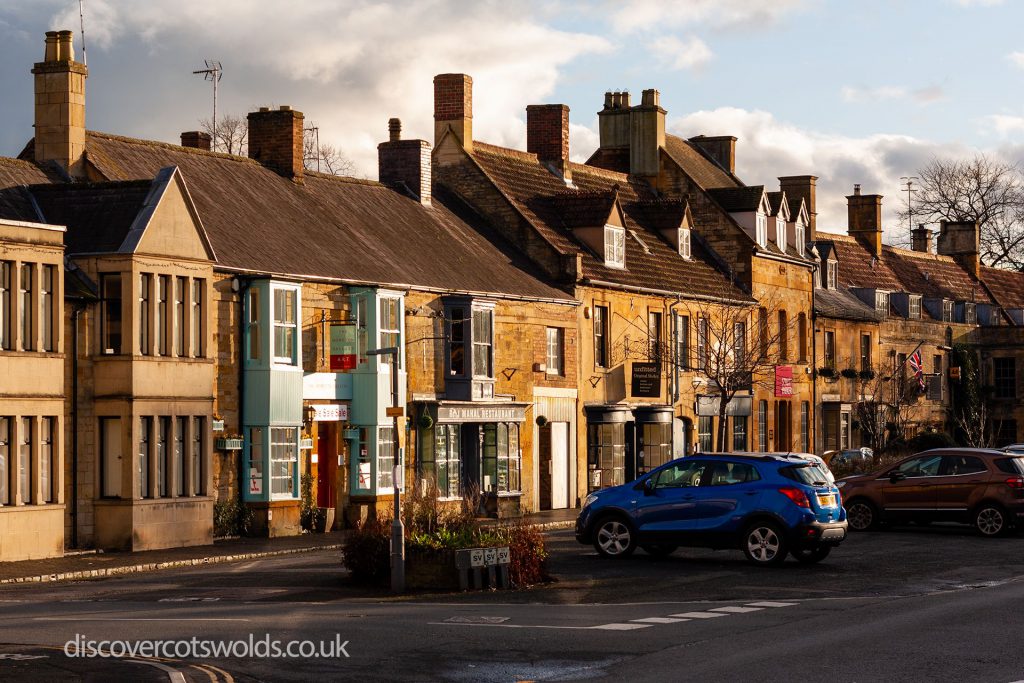
For week-long stays, consider splitting your time. Three nights north (Broadway or Chipping Campden) plus three nights south (Castle Combe, Tetbury, or Cirencester) gives you a fuller picture of the region.
Accommodation runs the full range. Country house hotels with beautiful grounds, traditional B&Bs above pubs, and self-catering cottages in the smaller villages all have their place. Self-catering tends to offer better value for families and small groups, particularly outside the headline villages.
We have separate guides to places to stay in Cirencester, Moreton in Marsh and Witney, or see our pick of luxury hotels in the Cotswolds.
Food, Drink, and Local Produce
Cream tea is the obvious order: scones, clotted cream, and strawberry jam, served with a pot of strong tea. Most tearooms in Bourton, Broadway, and Castle Combe do a reliable version.
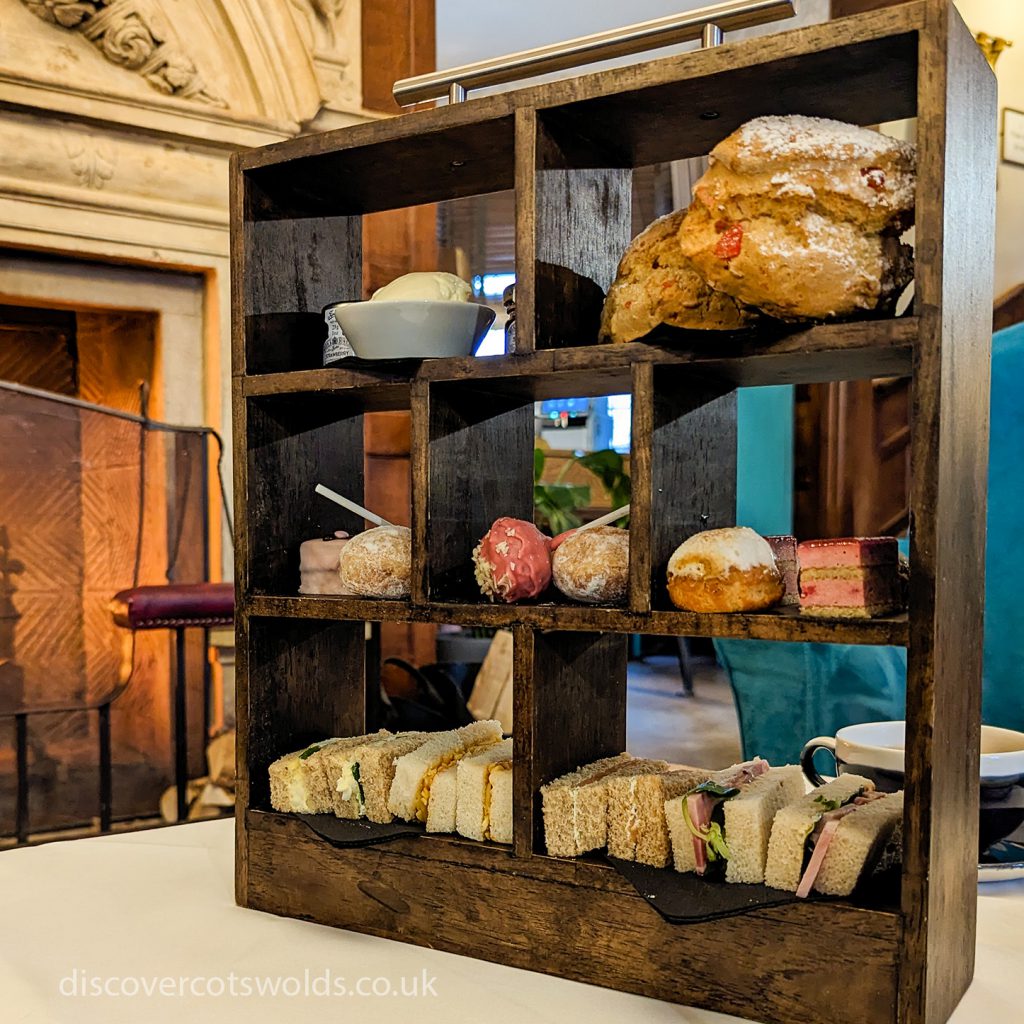
For local cheeses, look for Cotswold Brie, Single Gloucester, and Stinking Bishop on pub cheese boards. They show up regularly at farm shops and farmers’ markets across the region.
Daylesford Organic, near Kingham, is the regional gold standard for farm shops. The site combines a working organic farm, a cookery school, a deli, and a restaurant. It’s also priced accordingly. Smaller weekly farmers’ markets in Stroud, Cirencester, and Moreton-in-Marsh offer better-value local produce and a friendlier atmosphere.
For gastro pubs worth a detour, the Wild Rabbit in Kingham, the Bell at Sapperton, and the Lygon Arms in Broadway are well-regarded. Sunday roast at any of them is worth booking ahead, often a week or more out in summer.

If you’re self-catering, the Cotswolds is a good place to put together a picnic. Pick up bread from a village bakery, cheese and chutney from a farm shop, and apples from a roadside honesty box. A quiet field with sweeping views is rarely far away.
For more ideas, see our guide to must visit restaurants in the Cotswolds.
Events and Festivals
Throughout the year, the Cotswolds play host to a number of events and festivals celebrating everything from food and drink to art and music.
Here are some of the most well-known:
The Cotswold Show in Cirencester Park
This is one of the biggest events in the Cotswold calendar, and takes place over two days in early July. The show features hundreds of attractions, including live music, horse riding displays, falconry displays and much more.
Winchcombe Christmas Festival
A local classic, the Winchcombe Christmas Festival takes place every December and is a great day out for all the family. With carol singing, Morris dancers, street entertainers and over 70 lit Christmas trees, it’s the perfect way to get into the festive spirit.
Cornbury Music Festival
This annual music festival takes place in Great Tew Park in Oxfordshire, and features a range of well-known musical acts. Roughly 20,000 people turn out every July to enjoy the festivities.
Cheltenham Literature Festival
This is one of the UK’s biggest and most prestigious literature festivals, and takes place over several days in late October. The festival welcomes world-famous authors, poets and speakers, and offers over 500 events to choose from.
Fantasy Forest Festival
Playing to The Cotswolds’ historic significance, the Fantasy Forest Festival is a mediaeval-inspired sci-fi extravaganza that’s perfect for the whole family. It takes place mid July and features everything from re-enactments to memorabilia markets.
Practical Planning and Transport
A car gives you the most flexibility. Public transport works for the headline villages but thins out fast once you go off the main routes. If you’re planning to walk the Cotswold Way, or staying in Moreton-in-Marsh or Cheltenham, you can manage without one.
We have developed our own car free Cotswolds trip planner to help you plan a visit without access to a car. Or, read our guide on getting to the Cotswolds.
Parking is the main practical headache. Honeypot villages like Bibury, Castle Combe, and Bourton-on-the-Water fill their car parks by mid-morning in summer. Use designated public car parks rather than residential streets, and check signs for time limits.
Pack for changeable weather even in summer. Layers, waterproofs, and walking shoes with grip on wet limestone are worth bringing. The forecast can shift across a single afternoon, particularly on the escarpment.
Packing is simpler than people expect. Our guide to what to wear in the Cotswolds covers dress codes, dinner attire and the footwear that copes with wet limestone.
Cash is rarely needed, but small village shops, honesty boxes, and some country pubs still appreciate it. Mobile signal is spotty in the valleys, so download offline maps before you head into the hills.
Family-Friendly and Accessible Options
For families with younger kids, Cotswold Farm Park, Bourton-on-the-Water (Model Village, riverside paths, ice cream), and Sudeley Castle (gardens, falconry, Tudor history) are the most reliable picks. Birdland Park, also in Bourton, has penguins and is a good rainy-day option.

For visitors with limited mobility, Bourton-on-the-Water has paved riverside paths and accessible toilets. Sudeley Castle, Hidcote Manor Garden, and Painswick Rococo Garden have accessible routes through their main grounds. Broadway Tower has step-free access to the surrounding parkland and viewpoint, though the tower interior involves stairs.
Plan Your Trip
The Cotswolds rewards visitors who slow down. Pick a base that matches the season, build a list of three or four villages rather than ten, and leave room for a long lunch or an unscheduled walk.
For more on individual villages, walking routes, and seasonal events, browse our other guides, explore our broader Cotswolds guide and visitor resources, or get in touch about planning a trip that fits the way you like to travel.