A typical English cottage is a small, traditionally built rural home, originally a modest dwelling for farm and village workers, with thick walls of local stone, brick or timber, small windows, low ceilings and a steep roof of thatch or stone tile. What began as humble worker housing is now one of the most sought-after styles of home in the country, and the picture most people hold in their head when they imagine the English countryside.
The look is unmistakable: low and cosy rather than tall and grand, built close to the lane, often with a garden spilling over the front wall. Most have grown organically over centuries, a room added here, a lean-to there, which is why their shapes are rarely symmetrical and so much of their charm comes from the mix of textures and angles.
What defines an English cottage?
A few features turn an ordinary old house into a cottage in the way most people mean it:
A cottage is small and human in scale. It was built for a working family, not for show, so rooms are compact and ceilings are low. Doorways were often built low too, which is why so many old cottages make taller visitors duck.
The walls are thick and load bearing, made from whatever material was cheapest and closest to hand. That local sourcing is the whole reason cottages look so different from one part of England to another.
Windows are small, partly because glass was expensive and partly because thick walls and small openings keep the heat in. Many have leaded or mullioned windows divided into small panes.
Inside, the heart of the home is the fireplace. The large open inglenook, often with a bread oven set into the side, was where cooking and warmth happened, and it usually still anchors the main room today.
Outside, the cottage garden completes the picture: a generous, slightly unruly mix of flowers, herbs and vegetables, originally practical and productive rather than purely decorative.
Thatch, stone, brick: the materials that built them
Because cottages were built from local materials, the building stock of each region tells you what lay under the ground or grew in the fields nearby.
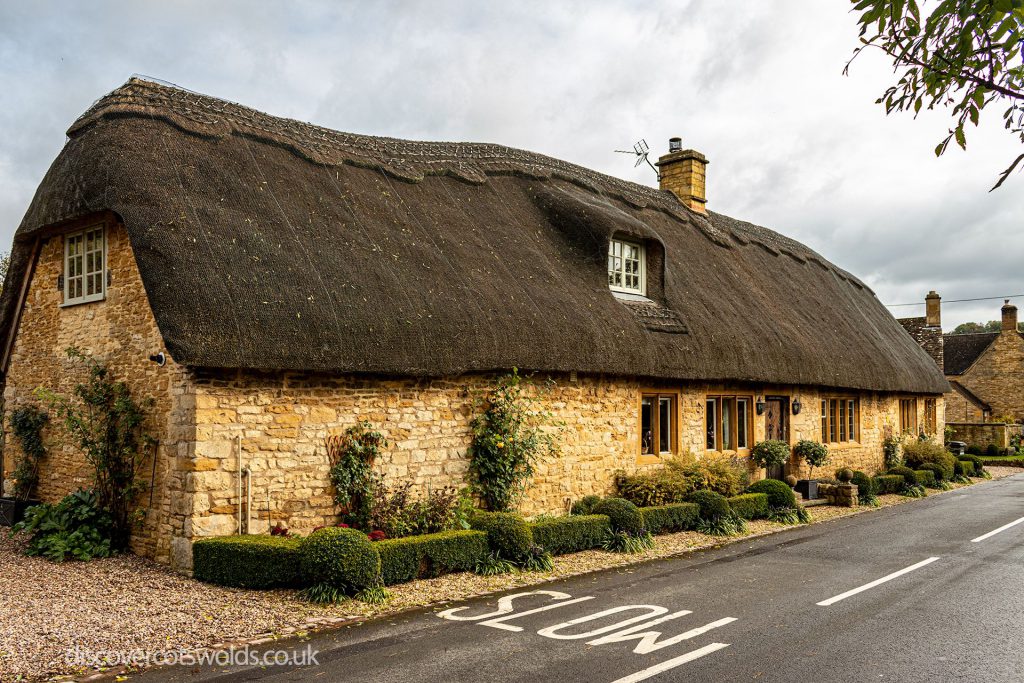
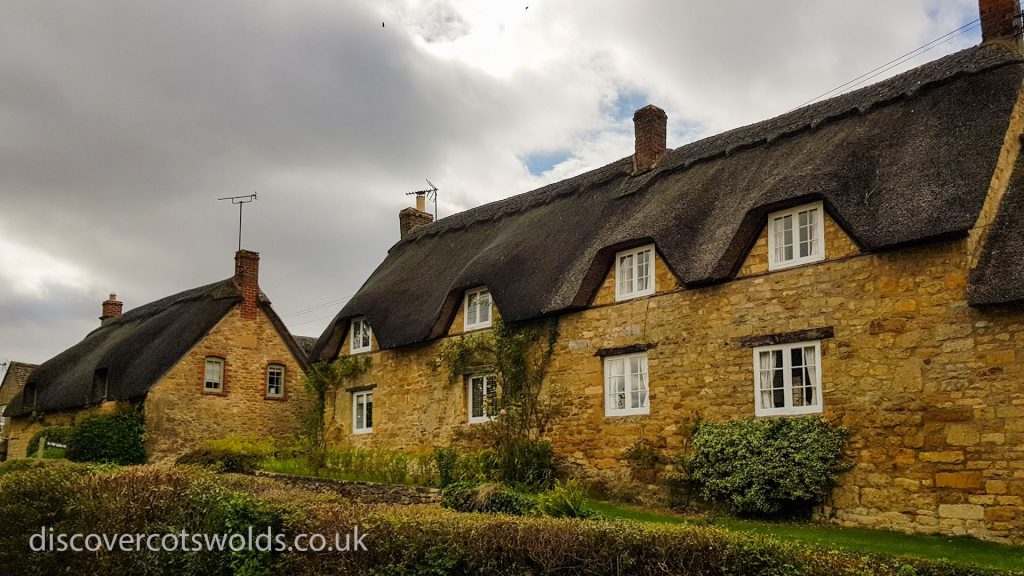
Thatch is the most romantic of all, and the image most people reach for first. A thatched roof is built up from bundles of dried plant material, usually water reed, combed wheat reed or long straw, layered thickly and fixed to the roof timbers. A good thatch sheds rain beautifully and insulates well, and a well maintained roof can last decades before the main coat needs replacing, though the ridge is renewed more often. Thatch is most common where reed and straw were plentiful, across southern and central England, including pockets of the Cotswolds such as Broad Campden.
Stone defines whole districts. In the Cotswolds it is honey coloured limestone; in the Pennines, darker millstone grit; in parts of the south east, knapped flint set into the walls. Stone cottages were roofed either in thatch or, where the local stone could be split, in heavy stone tiles.
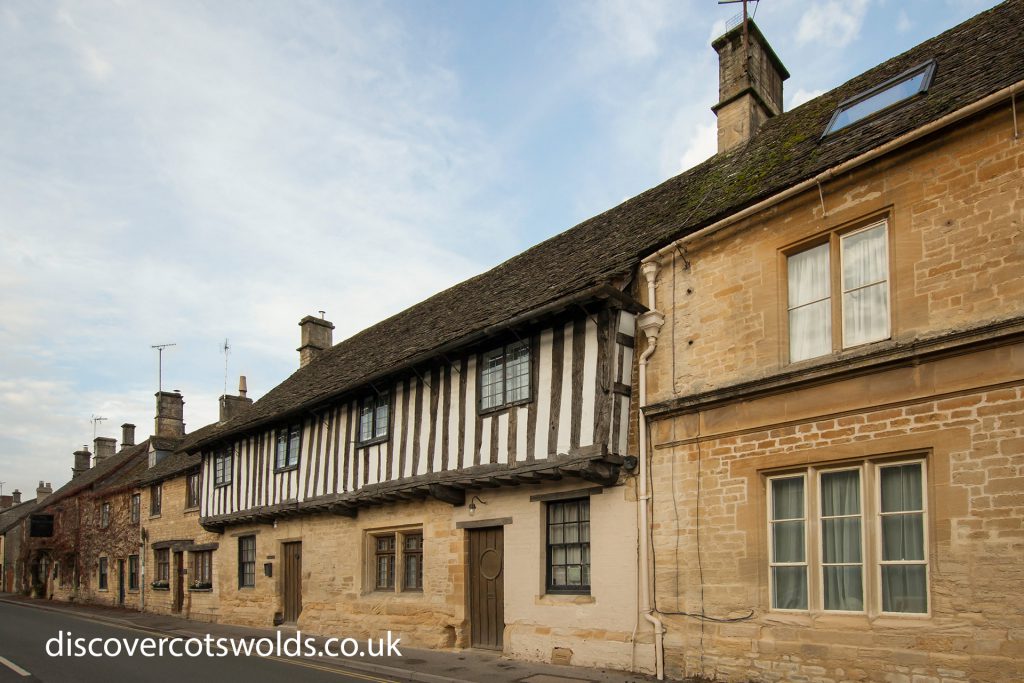
Brick became widespread later, especially across the Midlands, the south east and East Anglia, often in warm reds that weather to a soft, mellow tone.Timber framing is the other great tradition: a frame of oak filled with wattle and daub (woven wood plastered with a mix of clay, straw and dung), giving the black and white look associated with Tudor England. In the south west, many cottages were built from cob, a thick mix of earth, straw and water, under a thatched roof and a coat of limewash.
A short history of the English cottage
The word itself goes back to the medieval “cot,” a humble dwelling, and the “cottar,” a peasant who held a small cottage and a patch of land in return for labour on the lord’s estate. For most of their history, cottages were the homes of the rural poor: farm labourers, weavers, quarrymen and their families, built quickly and cheaply from local materials by the people who lived in them.
Their reputation changed in the eighteenth and nineteenth centuries. As wealthier people grew nostalgic for a simpler rural life, the cottage was reimagined as something picturesque and desirable. Designers even built “cottage orné,” deliberately quaint cottages for the well off, and the humble worker’s home became an aspiration rather than a necessity.
That shift never reversed. Today the features that once marked a cottage as basic, the small rooms, the wonky walls, the open fire, are exactly what make them so prized, and original cottages in pretty villages now sell for far more than the families who built them could ever have imagined.
Cotswold stone cottages
If there is one place where the English cottage reaches its most photographed form, it is the Cotswolds. The local stone is a Jurassic limestone that weathers to a warm, honey gold, deeper and more golden in the north of the region and paler and creamier as you move south. Whole villages built from it seem to glow in evening light.
The wealth that built these cottages came from wool. In the late medieval and Tudor periods the Cotswold wool trade made the area rich, and that money paid for the solid stone houses, weavers’ cottages and “wool churches” that still define the villages today. Look for mullioned windows with dripstones above them, steep roofs of thin Cotswold stone tiles, and the dry stone walls that thread the whole landscape together without a drop of mortar.
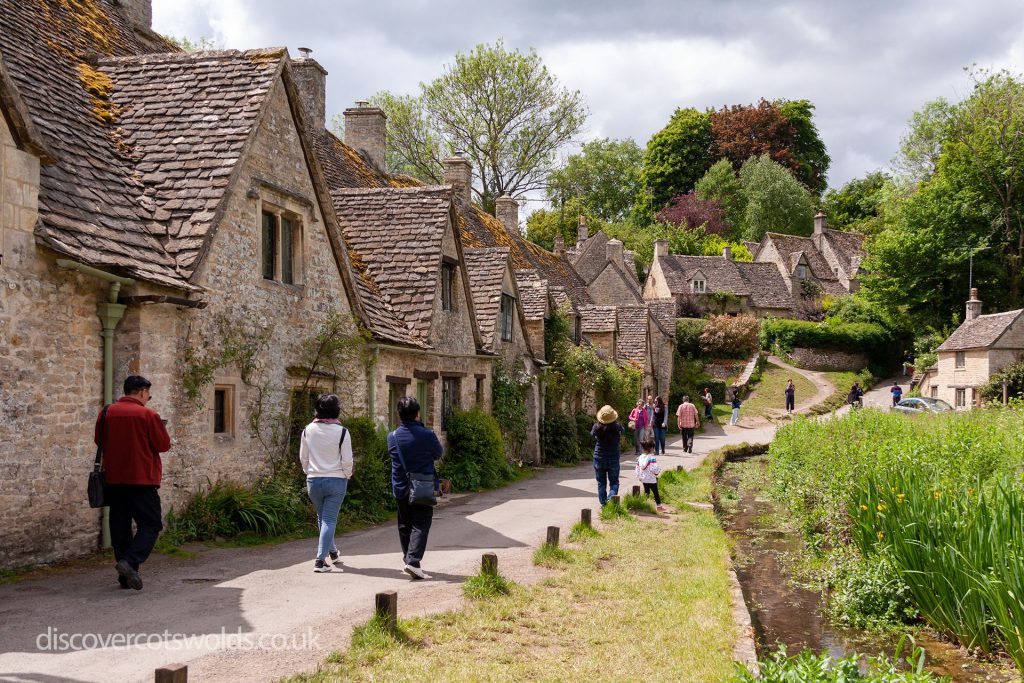
The most famous example of all is Arlington Row in Bibury, a row of cottages originally built as a wool store around 1380 and converted into weavers’ cottages in the seventeenth century. Now owned by the National Trust, it is one of the most photographed scenes in England. For more, our guides to Snowshill, Broad Campden and Bourton-on-the-Water are full of classic Cotswold cottage streets.
Can you stay in a Cotswold cottage?
You can, and for a lot of people it is the best way to experience the area. Staying in a cottage means waking up on a quiet village lane rather than in a town centre, and you get the low beams, the fireplace and the cottage garden as part of the deal rather than just photographing them from the road. If you want to make a trip of it, you can browse and book a self catering Cotswold cottage here
Tempted to see the real thing? Our complete guide to the Cotswolds covers the best villages, walks and places to stay.