“Eco” is a hard word to shop for. It gets attached to all sorts of stays, and it can be tricky to tell which places have genuinely built sustainability into how they run and which have simply added the label. So this is a deliberately short list. Every stay on it earns its place, and just as usefully, here is how to judge the ones that are not.
A few quick checks will tell you most of what you need to know.
What makes a Cotswold cottage genuinely eco
Three things are worth checking before you book anywhere that calls itself eco.
The first is heat. Old Cotswold stone is beautiful and hard to keep warm, so how a cottage is heated tells you most of the story. A wood-pellet biomass boiler, an air-source heat pump, or solar generation is a real investment in a lower footprint. A note about “energy-efficient bulbs” usually is not.
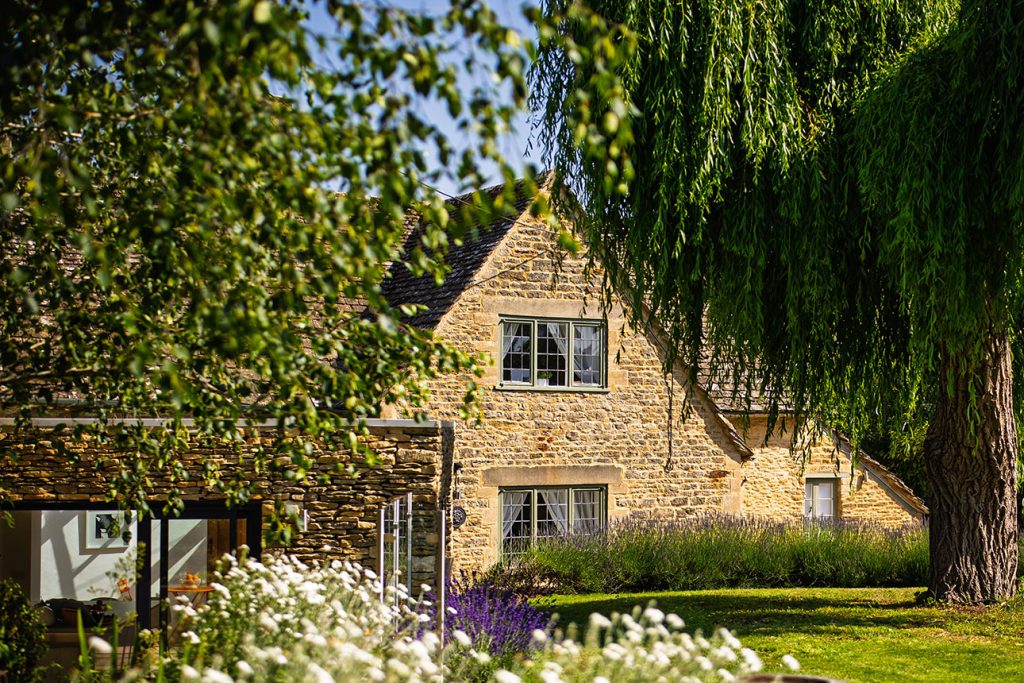
The second is certification. Green Tourism is the main independent scheme in the UK, and its Gold award is not handed out lightly. It means an auditor visited in person and the business met more than eighty per cent of the criteria, from energy and water to sourcing and waste. Only a small share of members reach Gold, so it is a shortcut you can trust when you do not have time to interrogate every listing.
The third, and the one most listings ignore entirely, is how you get there. A weekend of low-impact living undone by two long car journeys is not really a green break. The stays that reward arriving by train or bus, or that sit somewhere you can settle in and slow down, are doing the part that matters most. More on that below.
The eco cottages
Eco Chic Cottages, Shilton and Southrop. Two cottages near Burford, both independently holding Green Tourism Gold, and run as a carbon-neutral business. Sustainable renovation of traditional stone, underfloor heating, log fires and EV charging. If you want the credentials without the compromise on comfort, this is the benchmark. Book direct.
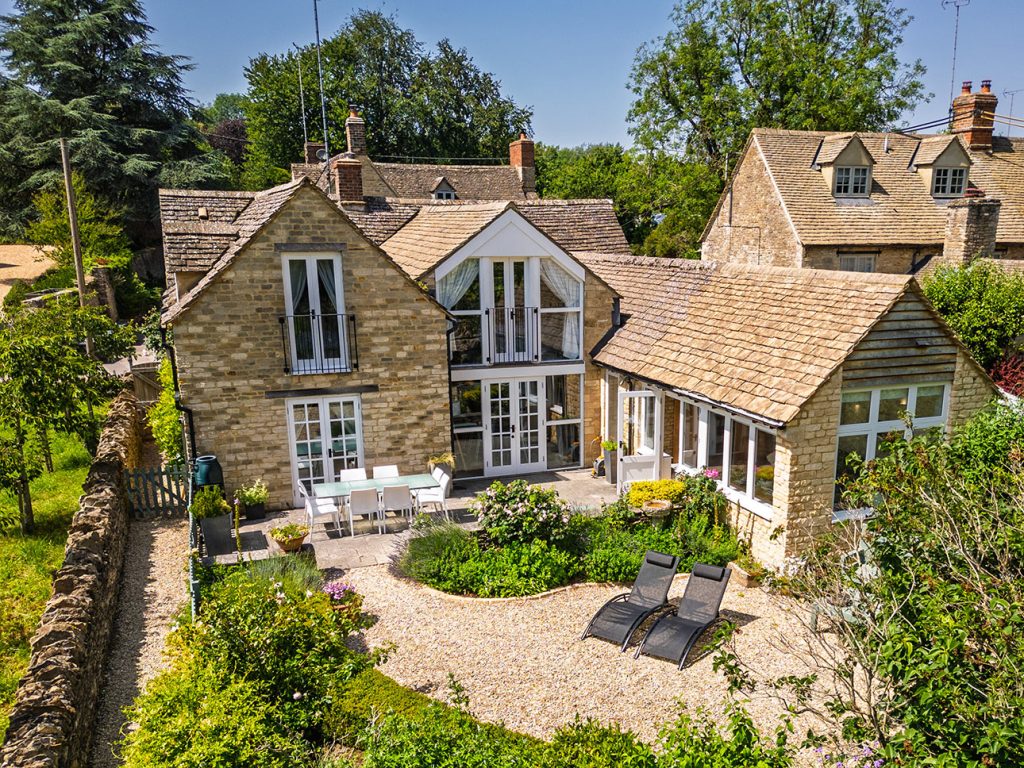
Heath Farm Holiday Cottages, Swerford. Five cottages created from former farm buildings near Chipping Norton, on a 70-acre estate of woodland and wildflower meadow. Green Tourism Gold since 2014, heated by a wood-pellet biomass boiler that replaced the old oil one, with solar panels, their own spring water supply, food-waste digesters and a compost loo in the grounds. The kind of place where the eco effort is the point, not the marketing. Book direct.
Westley Farm, Frampton Mansell. Three dog-friendly Cotswold stone cottages, each tucked into its own spot on a 70-acre farm of ancient woodland and rolling meadow in the AONB, run to high ecological standards in partnership with Natural England. Wood-burners, flagstone floors, and deer, buzzards and rare butterflies for neighbours. Book direct.
Abbey Home Farm, near Cirencester. A large organic estate with its own farm shop and café, where the cottage sits alongside off-grid huts, yurts and camping. The sustainability here is the whole operation, not a feature list: certified organic land, food you can buy metres from where you sleep. Book direct.
Off-grid huts and cabins
If you want to strip things back further, the Cotswolds has a small but genuine set of off-grid stays where solar and wood do the work. Worth knowing what that means before you book: off-grid usually comes with a composting loo, power that runs to essentials rather than hair dryers and hot tubs on demand, and a fair bit of cooking done outside. That is the point rather than a drawback, but go in expecting it.
Eastleach Downs Organic Farm. An off-grid shepherd’s hut on an organic farm, powered by solar and wind, with a woodburner and ancient woodland on the doorstep. Cook breakfast outside with the farm’s own produce. About as close to living lightly as a comfortable stay gets, and a few minutes from Southrop. Book direct.
Abbey Home Farm huts. Two off-grid shepherd’s huts beside Wiggold wood with an outdoor kitchen, on the organic estate above. Book direct.
The T Barn, near Cirencester. Three off-grid shepherd’s huts on a Cotswold farm, powered by solar panels, open year-round, with a firepit to cook on. Book direct.
Wolford Wood, near Moreton-in-Marsh. Off-grid cabins and camping in an SSSI of ancient woodland, run on a strict leave-no-trace basis: composting toilets, no single-use plastic, and everything you bring in goes home with you. Moreton-in-Marsh, with its train station, is a short walk away. Book direct.
Staying eco without a car
The single biggest thing you can do for a low-impact Cotswolds break is leave the car at home, and more of the area is reachable by train and bus than most people assume. Several of the stays above sit within reach of the Cotswold Line or the local bus network, and Moreton-in-Marsh in particular puts you on the doorstep of a station.
If that is the way you want to travel, we have a full guide to getting around the Cotswolds car-free: where to base yourself, which trains and buses actually connect, and what you can reach once you arrive. Read the Cotswolds without a car.
Frequently asked questions
Are there eco-friendly cottages in the Cotswolds? Yes, though the genuinely sustainable ones are a smaller group than the “eco” label suggests. The quickest way to be sure is to look for Green Tourism certification, and the Gold award in particular. Eco Chic Cottages near Burford and Heath Farm near Chipping Norton both hold it, running on renewable heat and solar.
What makes a holiday cottage sustainable? Three things tell you most of what you need to know: how it is heated, whether it holds an independent certification, and how easily you can reach it. Renewable heat such as a biomass boiler, an air-source heat pump or solar generation counts for far more than a note about energy-saving bulbs. Green Tourism Gold is a reliable independent benchmark. And a stay you can reach by train or bus, rather than a long drive, does the part that matters most.
Where can you stay off-grid in the Cotswolds? A handful of farms offer genuinely off-grid stays powered by solar and wood. Eastleach Downs and The T Barn both run off-grid shepherd’s huts near Cirencester, and Wolford Wood has cabins in ancient woodland near Moreton-in-Marsh, with composting toilets and a strict leave-no-trace policy.
Can you visit the Cotswolds without a car? More of the area is reachable by train and bus than most people expect, and arriving car-free is the single biggest thing you can do to lower the footprint of a trip. Basing yourself somewhere like Moreton-in-Marsh, which has its own station, makes it far easier. The car-free guide linked above covers the routes and the best bases.