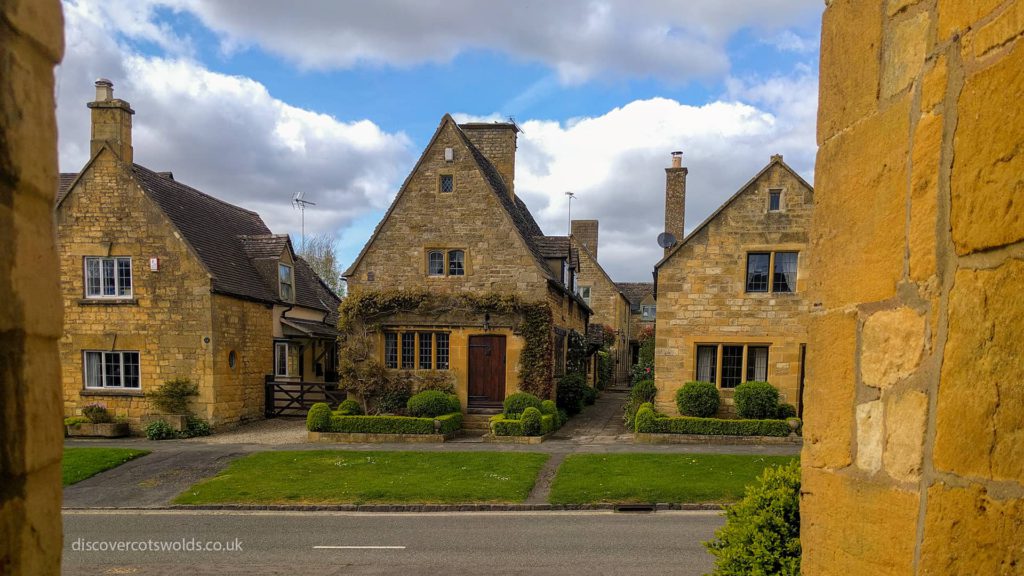
Broadway is one of the largest and best known villages in the Cotswolds, sitting in the far south-east corner of Worcestershire, close to the Gloucestershire border. It lies midway between the market town of Evesham and Moreton-in-Marsh, at the foot of Fish Hill, and has a permanent population of around 2,700. Long known as the “Jewel of the Cotswolds”, it is built around one of the widest village high streets in England, lined with honey-coloured stone cottages, independent shops, galleries and tea rooms.
A quintessentially British village
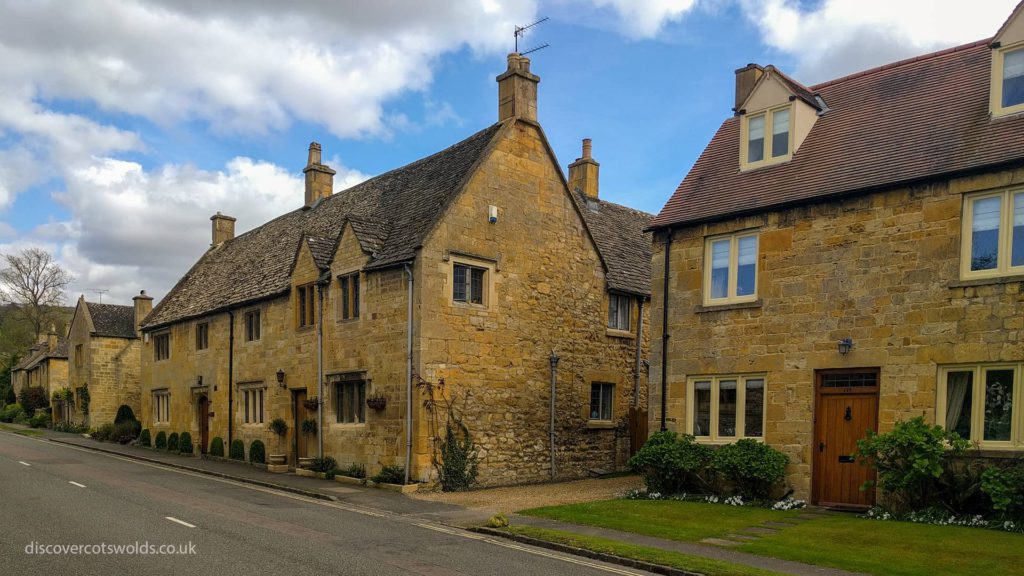
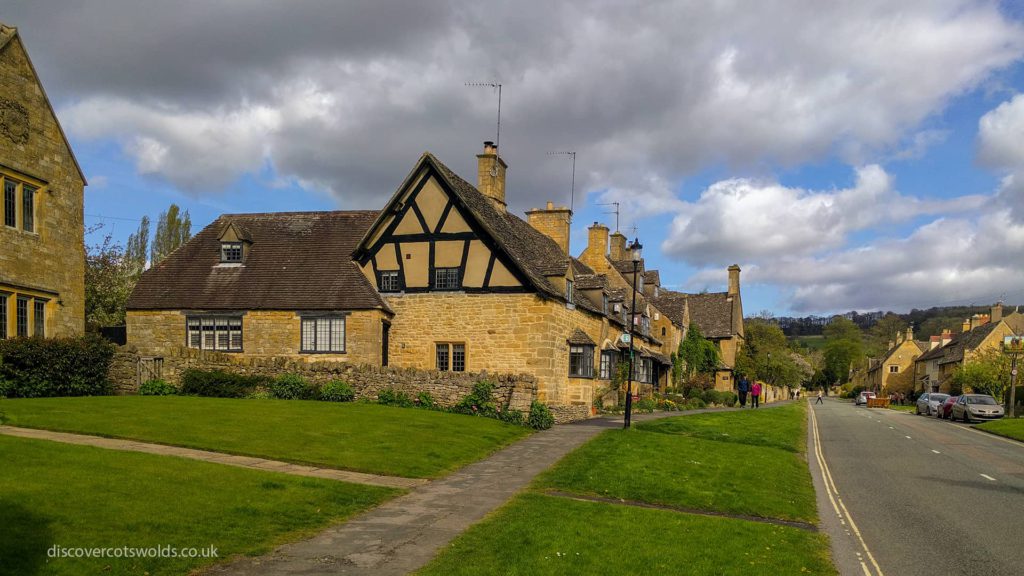
The phrase “quintessentially British” was never more fitting than here. Honey-coloured Cotswold stone cottages and red horse chestnut trees line the streets, and much of Broadway’s charm comes from its unusually wide high street and the mix of Tudor and Georgian buildings that face onto it. A stroll down it feels like stepping back in time, which is a large part of why the village draws international visitors year round.
Take a look around Broadway with this aerial 360 photo:
Things to do in Broadway
The beauty of the village is the main draw, but there is more here than a pretty street. Here is how to make the most of Broadway and the area around it.
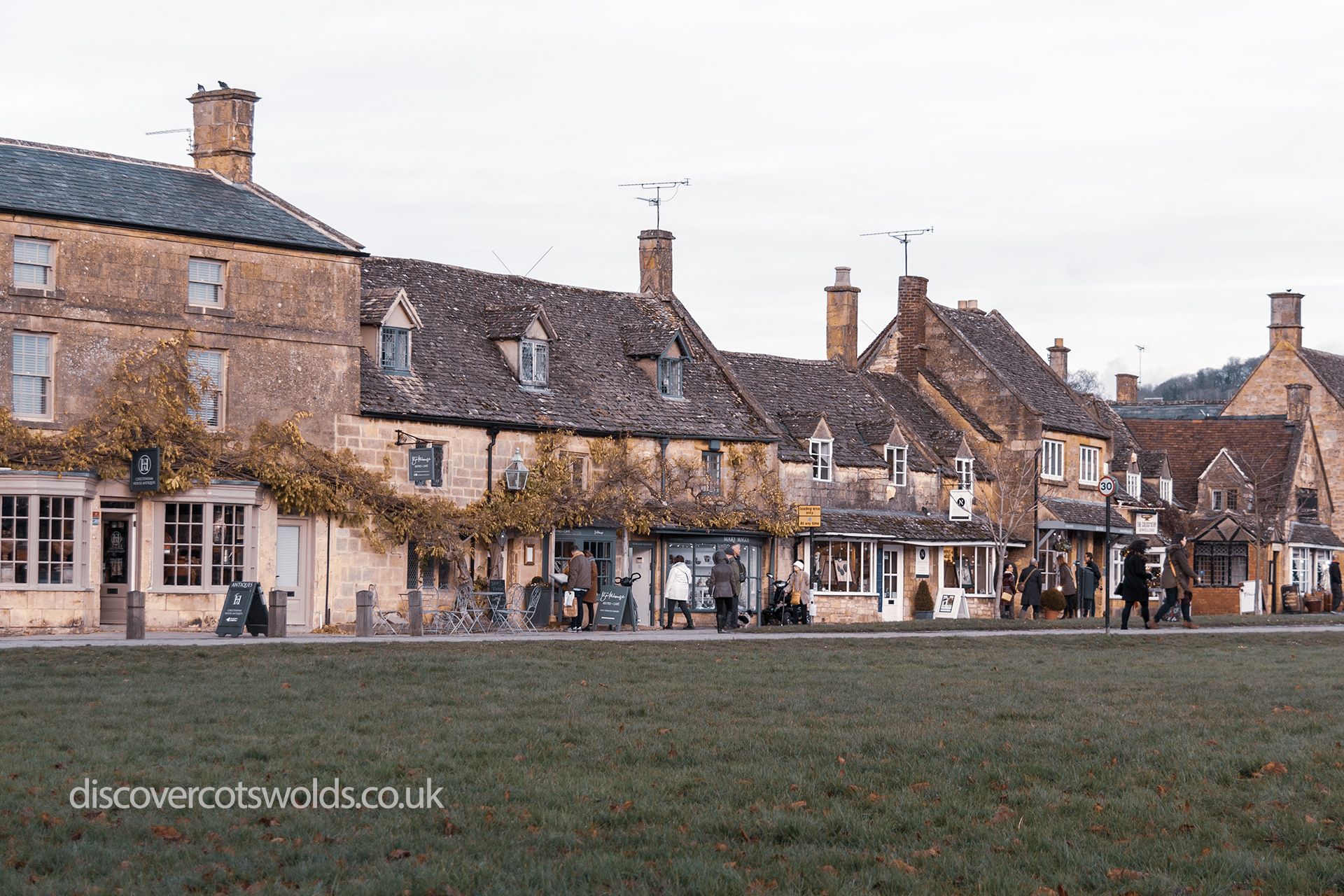
Walk the High Street. The broad street the village is named after gives you plenty of room to wander. It is lined with independent gift shops, clothing stores, tea rooms and a good number of antique dealers, along with several commercial art galleries. Whether you want lunch, a coffee or an afternoon of browsing, this is where to spend it.
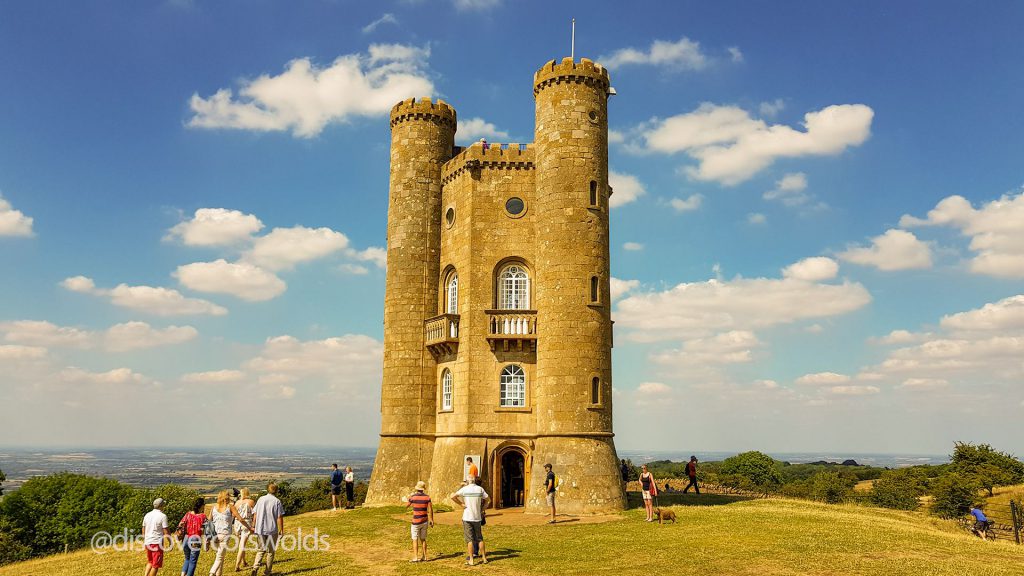
Broadway Tower and its deer park. Overlooking the village from the second highest point in the Cotswolds, Broadway Tower is the area’s landmark folly, with a deer park at its foot and long views on a clear day. It is a 30-minute walk uphill from the village or a five-minute drive. Full details are on our dedicated Broadway Tower page.
Ride the steam railway. Broadway has its own railway station again. It reopened in 2018 after volunteers rebuilt it from scratch, and it is now the northern terminus of the Gloucestershire Warwickshire Steam Railway, a heritage line that runs steam and diesel trains roughly 14 miles down to Cheltenham Racecourse by way of Toddington and Winchcombe. It is a leisure trip rather than a way to arrive in the village (see Getting to Broadway below), but the restored station and a ride through the countryside are worth building an afternoon around.
The Gordon Russell Design Museum. Tucked just off the High Street in Russell Square, this small museum tells the story of Sir Gordon Russell, the influential 20th-century furniture designer whose workshops were based in Broadway. It is run largely by volunteers, so check current opening days before you go.
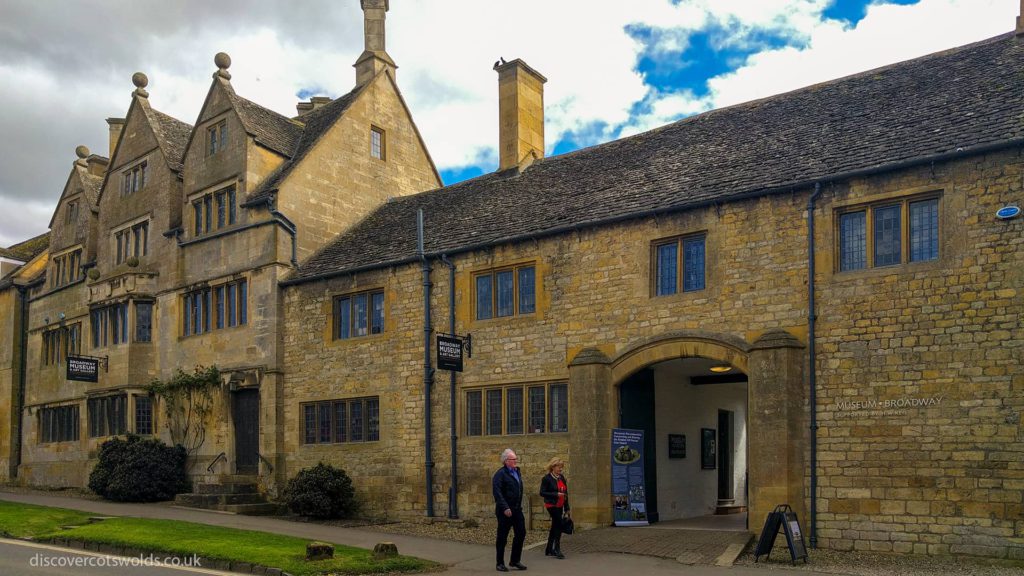
The Broadway Museum and Gallery. A community museum in one of the village’s historic buildings, telling the story of Broadway through art and objects.
Walk out into the countryside. Broadway sits right on the Cotswold Way, and several lovely routes start from the village centre. You can walk through bluebell woods to the quiet hamlet of Buckland, ramble across to Chipping Campden, or head up the lane to the old church of St Eadburgha’s. Whichever you choose, you are quickly out into open Cotswold countryside.
Broadway’s artistic heritage
Broadway has a genuine claim to a place in art history. In the 1880s it became the summer base for a colony of British and American artists and writers, and it was here, in the gardens of Farnham House and then Russell House, that John Singer Sargent painted his celebrated Carnation, Lily, Lily, Rose over the summers of 1885 and 1886. The painting now hangs in Tate Britain. Sargent’s circle in the village included the painter Francis Davis Millet, the illustrator Frederick Barnard (whose two daughters modelled for the picture) and the novelist Henry James, a regular visitor. The designer William Morris also knew the area well and used Broadway Tower on the hill above as a country retreat.
That heritage continues in the village’s galleries and its Museum and Gallery, and it is part of why Broadway still feels like a place with more depth than its chocolate-box looks suggest.
Getting here
Most visitors arrive by car. From the east you come in over Fish Hill, a 2.5km stretch of the A44 that climbs the escarpment above the village. The story goes that the name comes from monks who once kept stocked fish ponds on the hillside.
It is also one of the best viewpoints in this part of the Cotswolds, looking out across the vale (it is the view on the front page of our website). Broadway is around a two-hour drive from central London and within easy reach of Stratford-upon-Avon and Warwick.
If you would rather not drive, the nearest national rail stations are Evesham (around 6 miles) and Moreton-in-Marsh (around 7 miles), both with connecting buses or taxis into the village, and Broadway is also served by local buses from Evesham and Cheltenham.
It takes a little planning, and our guide to seeing the Cotswolds without a car covers the options. Note that the steam railway station, though it carries the Broadway name, is a heritage line and does not connect to the national network.
Where to stay in Broadway
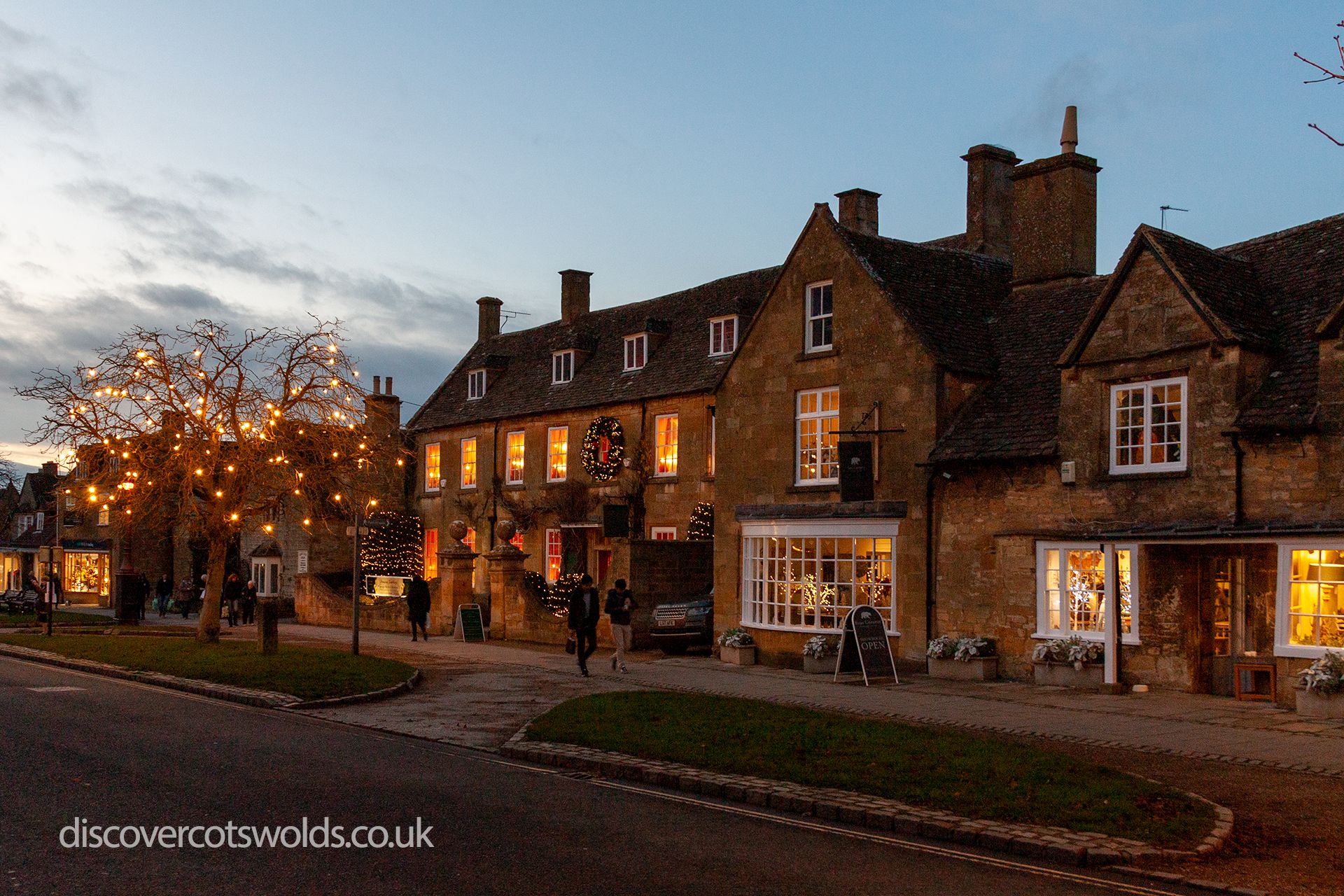
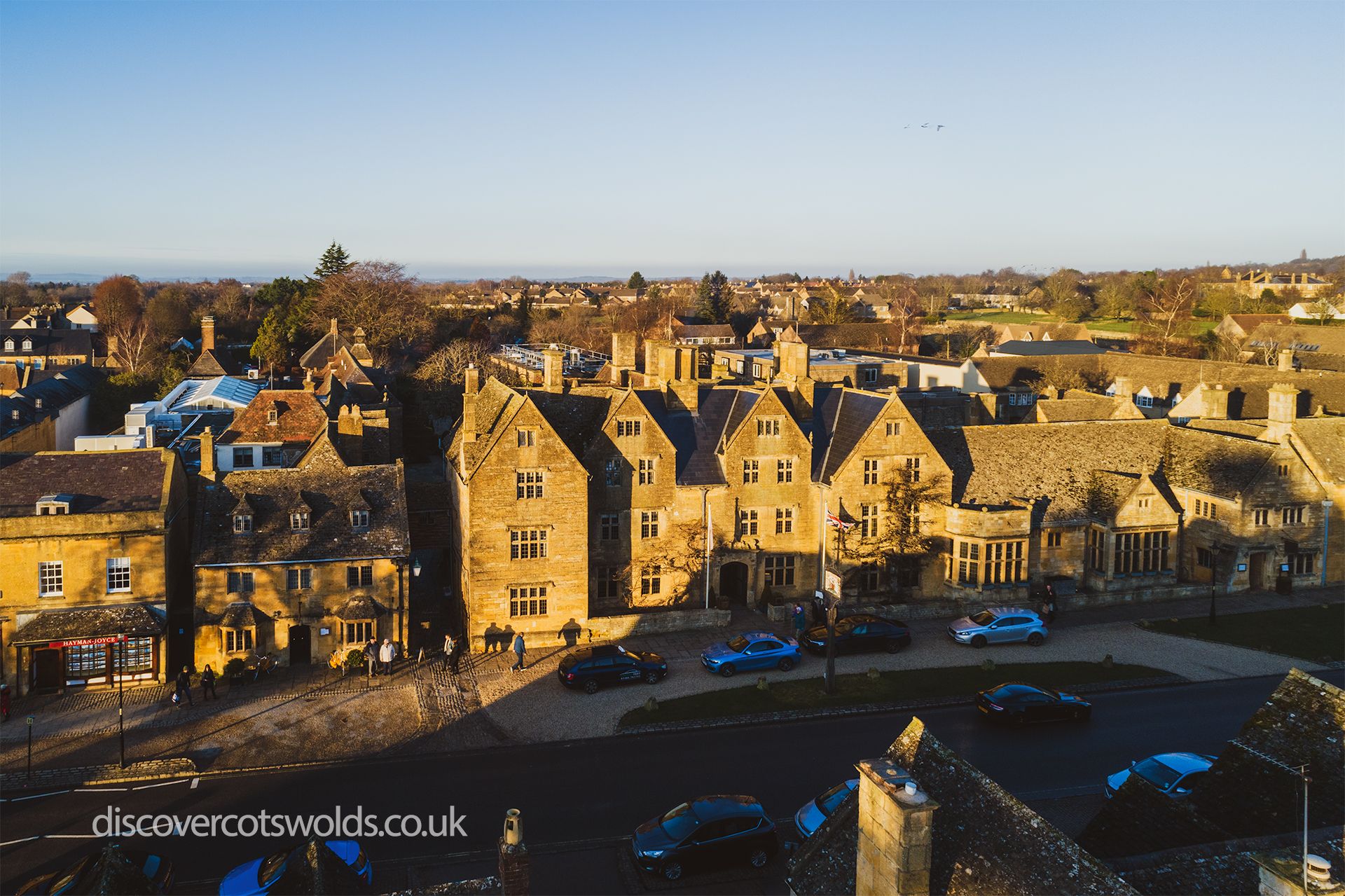
There is plenty in Broadway and the surrounding area to fill more than a day, so it makes a good base rather than just a stop. The village has hotels, inns and B&Bs to suit most budgets. The best known is the Lygon Arms, a former coaching inn on the High Street with parts dating back to the 14th century; both Charles I and, so the story goes, Oliver Cromwell are said to have stayed during the Civil War, and it trades today as a luxury hotel.
For more options across the area, see our guides to luxury hotels in the Cotswolds and bed and breakfasts in the Cotswolds.
Places to visit near Broadway
Broadway makes an ideal base for the northern Cotswolds. Within a short drive or walk you will find:
- Broadway Tower and its deer park, on the hill above the village
- Snowshill, a beautifully unspoilt village with its National Trust manor and, in season, the lavender fields
- Broad Campden, a quieter neighbour of Chipping Campden
- Moreton-in-Marsh, the North Cotswolds market town with its Tuesday street market
See more Cotswold villages across the region.
Frequently asked questions
Where is Broadway in the Cotswolds? Broadway is in the far south-east of Worcestershire, close to the Gloucestershire border, midway between Evesham and Moreton-in-Marsh at the foot of Fish Hill.
Why is Broadway called the Jewel of the Cotswolds? The nickname comes from its unusually wide, elegant high street of honey-coloured stone cottages, its Tudor and Georgian architecture and its setting below the escarpment, which together make it one of the most photographed villages in the Cotswolds.
Why is Fish Hill called Fish Hill? Fish Hill is the stretch of the A44 that climbs the escarpment to the east of Broadway. The traditional explanation is that monks once kept stocked fish ponds on the hillside, giving the hill its name.
What is there to do in Broadway? Wander the High Street with its antique shops, galleries and tea rooms, walk or drive up to Broadway Tower, visit the Gordon Russell Design Museum and the Broadway Museum and Gallery, ride the heritage steam railway from Broadway station, and walk out on the Cotswold Way to Buckland or Snowshill.
What is the nearest train station to Broadway? On the national rail network, the nearest stations are Evesham (around 6 miles) and Moreton-in-Marsh (around 7 miles). Broadway also has its own heritage steam railway station, but that is a leisure line and does not connect to the mainline network.
Is Broadway worth visiting? Yes. It combines one of the prettiest high streets in England with a real depth of history and art, good places to eat and stay, and easy access to Broadway Tower, Snowshill and the wider North Cotswolds.