Picking the cottage is the easy part. There are hundreds of them, most built from the same honey-coloured stone, and the photos can all start to look alike after a while. The decision that changes your holiday is where the cottage is.
The Cotswolds covers nearly 800 square miles across six counties. A cottage in Chipping Campden and one in Tetbury are close to an hour apart by car, and a pretty village with no pub, no shop and one bus a week feels very different by day three than it did in the listing. This guide is about choosing the area first, then the cottage.
If you came here wondering what makes a cottage a cottage, that’s a different page: the typical English cottage.
We may earn a commission if you book through some links on this page. Disclosure.
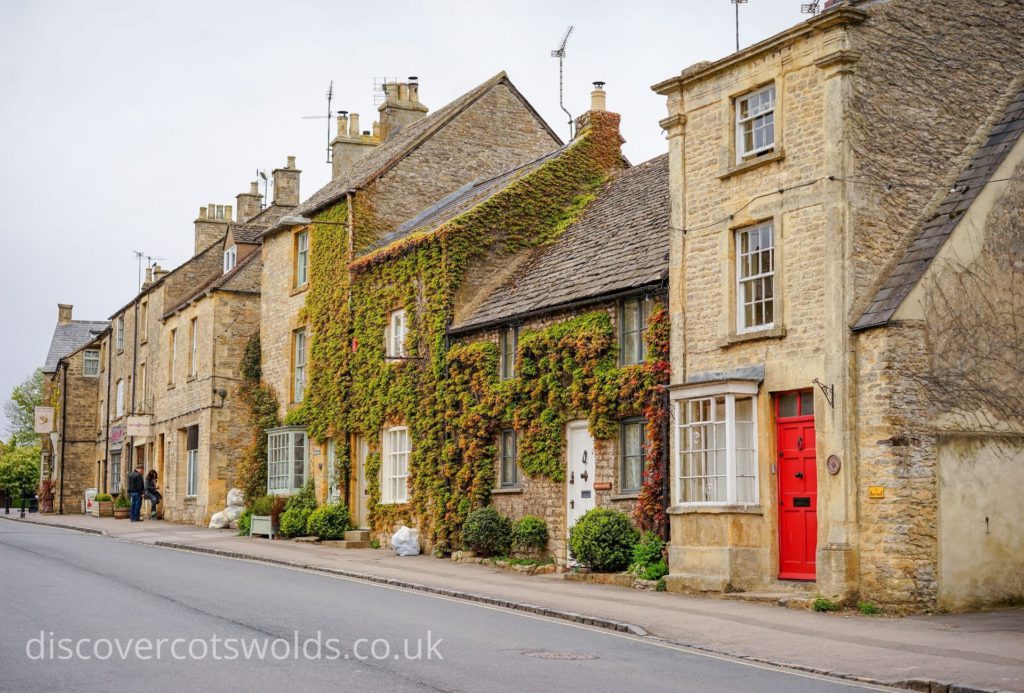
The bases at a glance
| Base | Good for | Need a car? | Nearest station |
|---|---|---|---|
| Moreton-in-Marsh | First visits, arriving by train | No | Moreton-in-Marsh |
| Stow-on-the-Wold | Pubs on the doorstep, north Cotswolds touring | Helps | Kingham |
| Bourton-on-the-Water | Evenings after the day visitors leave | Helps | Moreton-in-Marsh |
| Chipping Campden & Broadway | Walkers, the Cotswold Way | Helps | Moreton-in-Marsh |
| Cirencester | The south, car-free with the 855 bus | No | Kemble |
| Winchcombe | Walking, Sudeley Castle | Helps | None nearby |
| Stroud & the valleys | Quieter, less polished, good for walkers | Helps | Stroud |
| Tetbury & the south | Westonbirt, Malmesbury, Castle Combe | Yes | Kemble |
| Small villages | Peace and quiet | Yes | Varies |
Moreton-in-Marsh
If it’s your first time and you’re not sure where to start, start here. Moreton has direct trains to London Paddington on the Cotswold Line, a proper high street with supermarkets, and a street market every Tuesday. It isn’t the prettiest town in the Cotswolds (it doesn’t pretend to be), but it’s the one people who know the area keep recommending as a base, and the reason is practical: you can get in & out of it without a car.
Stow, Bourton, Chipping Campden and Blockley are all within easy reach. Our day trips from Moreton-in-Marsh page covers what you can do from here, by car and without one.
Cottages in and around Moreton-in-Marsh
Stow-on-the-Wold
Stow sits on top of a hill, and its market square has more pubs around it than you’d expect for a town this size. That’s the appeal of a cottage here: you can walk to dinner and walk back, which matters more than it sounds once you’ve spent a week deciding who’s driving.
There’s no station in Stow. Kingham, on the same line as Moreton, is a few miles away, so you’ll want a taxi or a car for that last stretch. More in our Stow-on-the-Wold guide.
Cottages in and around Stow-on-the-Wold
Bourton-on-the-Water
Bourton is the busiest village in the Cotswolds during the day, and nobody who’s been on a summer Saturday would tell you otherwise. Staying here is a different experience. Once the coaches have gone, the river & the little bridges are yours, and that’s the version of Bourton most visitors never see.
The walk from Bourton to Lower and Upper Slaughter starts on the edge of the village, so you can do it from the cottage door. Our Bourton-on-the-Water guide has more on the village itself.
Cottages in and around Bourton-on-the-Water
Chipping Campden & Broadway
These two are in the far north of the Cotswolds, a few miles apart, and both work well for walkers. Chipping Campden is where the Cotswold Way starts (or finishes, if you’ve walked the 102 miles up from Bath), and the trail runs through Broadway on its way south. Broadway Tower is on the hill above Broadway.
“Chipping” means market, by the way, which is why it turns up in Chipping Campden, Chipping Norton & Chipping Sodbury.
The 606 bus links Broadway and Chipping Campden with Winchcombe and Cheltenham, but only a few times a day, so a car makes life easier here. See our guides to Broadway and the Cotswold Way.
Cottages in and around Chipping Campden
Cottages in and around Broadway
Cirencester
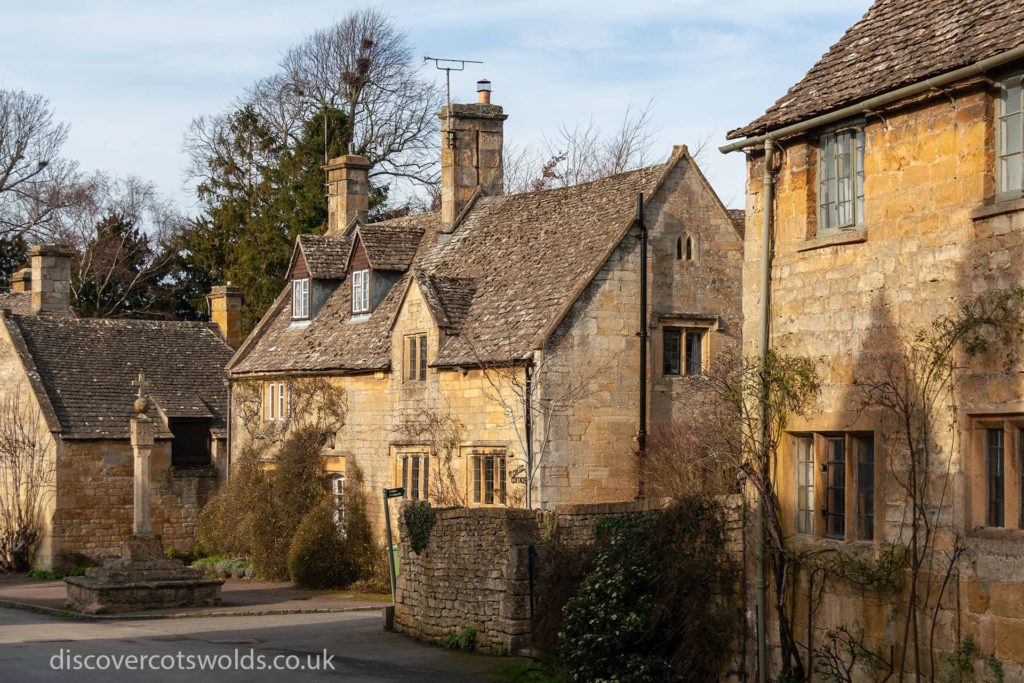
Cirencester is the biggest town in the Cotswolds and the best base for the south. (It’s pronounced Siren-sester, if you were wondering.) The 855 bus runs hourly from here through Bibury, Northleach and on to Bourton, which makes it one of the few places where a car-free week works without much planning. Kemble station, a few miles away, has direct trains to London Paddington.
There’s more on the town in our Cirencester guide, and if you’re thinking about doing without a car altogether, read the Cotswolds without a car before you book anything.
Cottages in and around Cirencester
Winchcombe
Winchcombe is a small town on the western edge, with Sudeley Castle on its doorstep and the Cotswold Way passing straight through. The 606 bus calls here on its way between Cheltenham and Chipping Campden. Our Winchcombe guide has the detail.
Cottages in and around Winchcombe
Stroud & the valleys
The Stroud valleys feel nothing like the north Cotswolds. The hills are steeper, the villages cling to the sides of them, and the old mills along the valley bottoms are a reminder that this was cloth country. Stroud itself has a station with trains to London, and Painswick is a short drive away. We’ve written about a short stay near Stroud.
Tetbury & the south
Tetbury is the base for Westonbirt Arboretum, a few miles down the road, and it puts Malmesbury, Castle Combe and Bath within reach. You’ll need a car down here. See our guides to Tetbury and Castle Combe.
Cottages in and around Tetbury
Staying in a small village
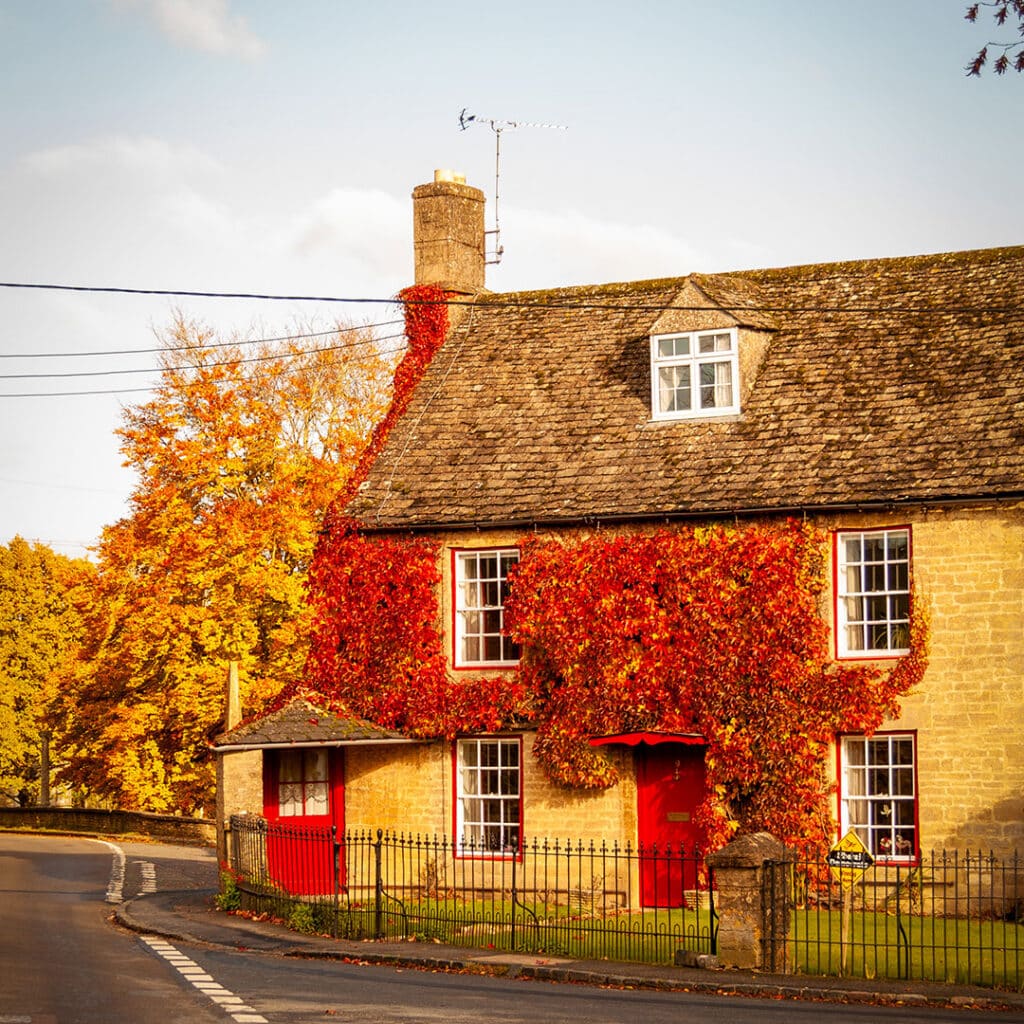
This is what most people picture when they think of a Cotswold cottage: a stone house in a village of a few dozen others, a church, and not much else. It can be wonderful. Just check three things before you book. Is there a pub you can walk to? Where’s the nearest shop? And is there a bus at all? In a lot of the smaller villages the answer to the last one is no, so a cottage there means a car for every meal you don’t cook.
Before you book
Changeover days
Many cottages only take week-long bookings starting on a fixed day, often a Friday or Saturday. Short breaks of three or four nights are common outside the summer holidays, but not every owner offers them.
Parking
Cottages in the middle of a village or town often have no parking of their own. If the listing doesn’t say “parking on-site”, ask where you’d leave the car.
Stairs & beams
Older cottages tend to have steep, narrow staircases and low ceilings. That’s part of the charm until you’re carrying a suitcase up them, so check the listing if anyone in your group isn’t steady on their feet.
Heating
Stone walls are thick and old cottages can be chilly in winter. A woodburner or open fire is worth having from October onwards.
Thatch
Most Cotswold cottages are roofed with stone slate, so thatched ones are rare. If you’ve got your heart set on one, you’ll be choosing from a handful.
Dog-friendly cottages
The Cotswolds is good walking country and plenty of cottages take dogs. Check how many dogs the listing allows and whether the garden is enclosed, because both vary a lot from one cottage to the next.
Dog-friendly cottages in the Cotswolds
Something different
Arlington Row
The National Trust lets out cottages on Arlington Row in Bibury, one of the most photographed streets in the country. You’ll have plenty of company outside during the day. Our Bibury guide has more. National Trust holiday cottages in the Cotswolds
Eco cottages and shepherd’s huts
We’ve picked out the stays that do more than use the word “eco” in eco cottages in the Cotswolds.
Somewhere with service
If you’d rather not cook, see our pages on luxury hotels and B&Bs, or the full places to stay in the Cotswolds guide.
Frequently asked questions
What is the best area to stay in the Cotswolds?
For a first visit, Moreton-in-Marsh, because it has direct trains to London, shops, and easy access to Stow, Bourton and Chipping Campden. For the south, Cirencester. If you want pubs you can walk to, Stow.
Do I need a car if I rent a cottage in the Cotswolds?
Not if you stay in Moreton-in-Marsh or Cirencester, which both have stations nearby and bus links to other towns and villages. In the smaller villages you almost certainly will.
Can you stay on Arlington Row in Bibury?
Yes. The National Trust owns Arlington Row and lets out cottages there as holiday homes.
Are there thatched cottages in the Cotswolds?
A few, but not many. Most Cotswold cottages have stone slate roofs.